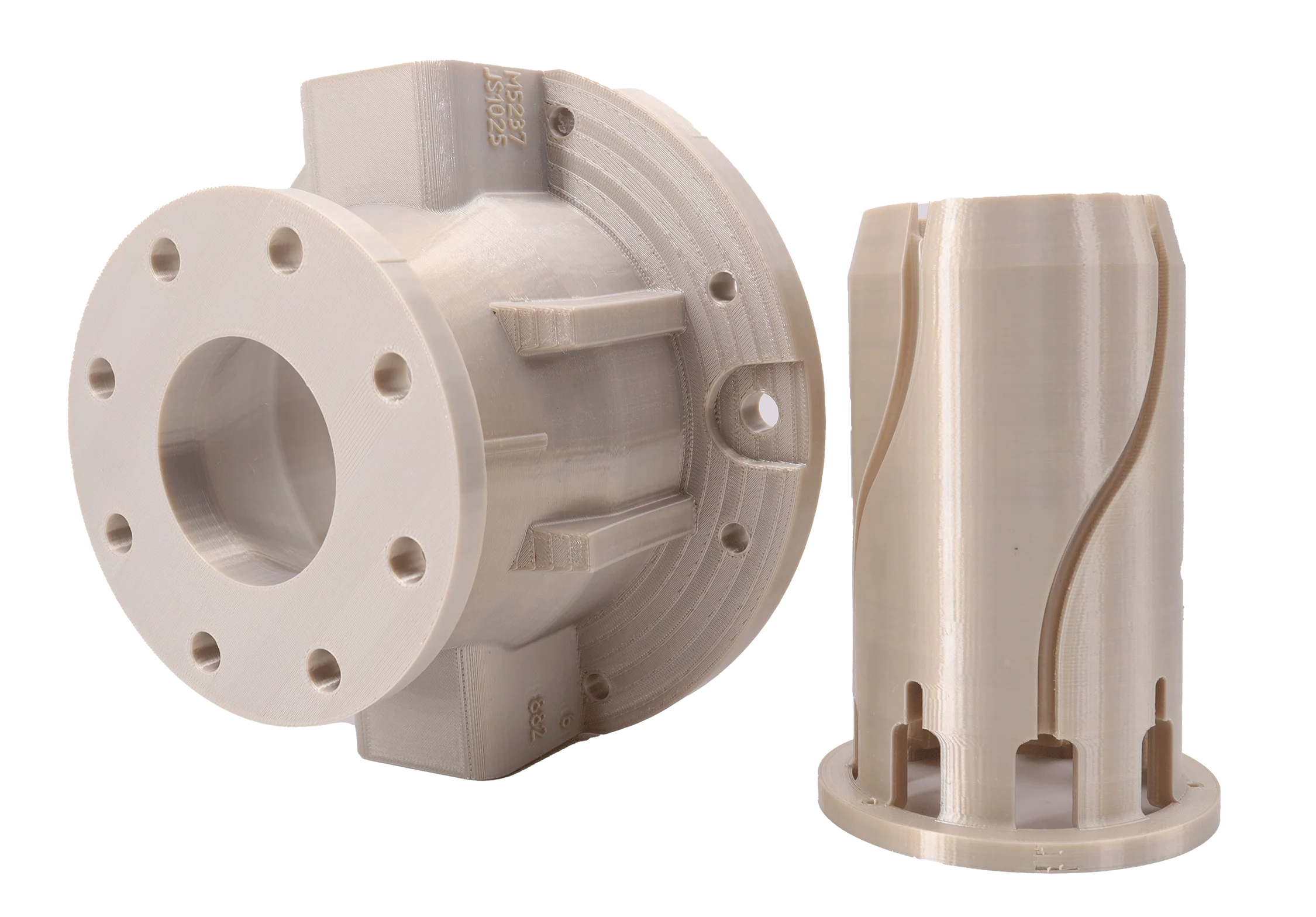
When an aircraft is grounded because of a cabin part you can’t buy, every day costs money.
Quick answer: Australia’s aviation regulator has approved 3D printed cabin air-conditioning ducting for the 214B helicopter. Printing the ducting was the easy part. Building the procedures, quality controls and inspection methods took close to two years. For MRO teams in Malaysia, non-structural cabin parts made from flame-rated, traceable materials are the realistic place to start, with your design authority involved from the beginning.
What happened
On 12–13 October 2026, Queensland-based aviation engineering firm Plane Support announced that Australia’s Civil Aviation Safety Authority (CASA) had granted it an Australian Parts Manufacturer Approval (APMA). The approval lets it produce 3D printed cabin air-conditioning ducting components for the 214B (B-1) helicopter (AviationPros).
The 214B is a heavy-lift helicopter used in Australian bushfire operations. The project was started by McDermott Aviation, the aircraft’s type certificate holder and largest operator, which wanted more control over its spare-part supply. As McDermott’s founder put it: “An aircraft waiting on a component you can’t easily get hold of is an aircraft that isn’t working.” (VoxelMatters)
According to the published reports, the team:
- 3D scanned the original ducting and reverse-engineered the digital models
- redesigned the parts for additive manufacturing
- set up a dedicated aerospace additive manufacturing lab built around a Markforged FX10 industrial printer
- wrote its own procedures, quality systems, production controls and inspection methods, and worked them through with CASA, because there was no established route to follow
The work took close to two years. The material, cost and lead times have not been disclosed. Plane Support says the groundwork gives it a pathway to other components and other aircraft types (3D Printing Industry).
Why it matters for MRO teams in Malaysia
Malaysia has an active MRO sector, from line maintenance at the main airports to heavy-maintenance and component shops serving regional fleets. Many of the aircraft involved, especially helicopters, turboprops and older narrow-bodies, depend on non-structural cabin parts that OEMs no longer stock, or only supply in large batches with long lead times.
Three lessons stand out:
- The bottleneck is paperwork, not printing. Printing a duct is simple. The two years went into proving to the regulator that every duct is identical, made from a controlled material and inspected to a defined standard. Plan for the documentation workload, not just the print job.
- The type certificate holder was involved from day one. McDermott, as design authority, started and backed the project. In Malaysia, the regulator is the Civil Aviation Authority of Malaysia (CAAM). The approval route for any replacement part depends on your organisation’s approvals and on the aircraft’s design authority, so involve them before you print anything intended for an aircraft.
- Non-structural cabin parts are the logical starting point. Ducting, brackets, covers, clips and trim carry low loads but still have to meet flammability requirements. Flame-rated aerospace polymers can meet the material requirement, and the inspection plan stays manageable.
From hard-to-source part to approved replacement: the workflow
Here is a version of the Plane Support approach sized for an ASEAN maintenance organisation.
- Shortlist your problem parts. Go through your AOG and delay records for the past 12–24 months. Flag non-structural cabin and environmental-system parts that were hard to source or had long lead times or high minimum order quantities.
- Capture the geometry. If drawings are not available, 3D scanning and reverse engineering can recreate the CAD model. Our guide to reverse engineering obsolete parts explains the workflow.
- Choose a qualified material, not just a strong one. For cabin interiors, flammability compliance usually decides the material (see the table below).
- Agree the paperwork up front. Before production, agree with your print supplier what comes with each batch: material certificates, lot traceability and the build records you need.
- Prototype, test, then lock the process. Print first articles, check fit and function on the ground, then freeze the build settings and orientation. Any later change to material or process should trigger a review.
Materials for aircraft cabin parts
| Requirement | Material Quick 3D prints | Why it fits |
|---|---|---|
| Aircraft cabin flammability (FST) | Ultem™ 9085 | FAA-certified material; meets FAR 25.853 and OSU 65/65 |
| UL94-rated flame retardancy | PA12 FR, Ultem 9085, FR resin | Materials with UL94 Blue Card listings |
| Stiff, lightweight brackets | Markforged continuous carbon fibre | High stiffness-to-weight for brackets and tooling |
| Static-sensitive avionics areas | ESD-safe materials | Tested to IEC 61340-5-1 |
Your design authority sets the actual material requirement. The table lists options, not an approval. See all aerospace-grade materials.
How Quick 3D can help
Quick 3D is an industrial 3D printing service in Shah Alam that specialises in parts needing certification. We print the parts that need paperwork:
- The largest materials library in Malaysia: 35+ brands and 500+ options, including flame-rated, ESD-safe and ISO 10993 materials
- Aerospace-grade polymers such as Ultem 9085, FAA-certified for FST applications, and UL94 Blue Card materials
- Markforged continuous carbon fibre for stiff, lightweight brackets and tooling
- Experience across ASEAN: 100+ customer brands in aerospace, automotive, oil & gas, medical and electronics
Quick 3D was not involved in the Plane Support project. We are a print-only manufacturer: we print to your CAD and material specification and supply parts as printed. We do not sand, paint or assemble, and airworthiness approval remains with your approved organisation and design authority. For more on stocking parts digitally, see spare parts 3D printing.
Frequently asked questions
Can 3D printed parts be installed on aircraft in Malaysia?
Yes, but only through an approved route. The part, material and process must be accepted by the relevant authority (CAAM in Malaysia) through your approved organisation and the aircraft’s design authority. A print bureau alone cannot make a part airworthy.
What material is used for 3D printed aircraft ducting?
Plane Support has not disclosed its material. For aircraft cabin parts in general, flame-rated polymers such as Ultem 9085, which meets FAR 25.853, are a common choice because flammability compliance usually drives the decision.
Which aircraft parts are good first candidates for 3D printing?
Low-load, non-structural parts with supply problems: ducting, covers, clips, brackets and trim. Avoid flight-critical or primary structural parts for a first project.
Does Quick 3D finish or assemble printed aircraft parts?
No. Quick 3D prints parts only and supplies them as printed with the agreed documentation. Finishing, installation and approval remain with your MRO organisation.
Got a cabin part you can’t source?
Share the CAD file, drawing or part list. Our engineers will recommend flame-rated, traceable materials and quote print-only production.