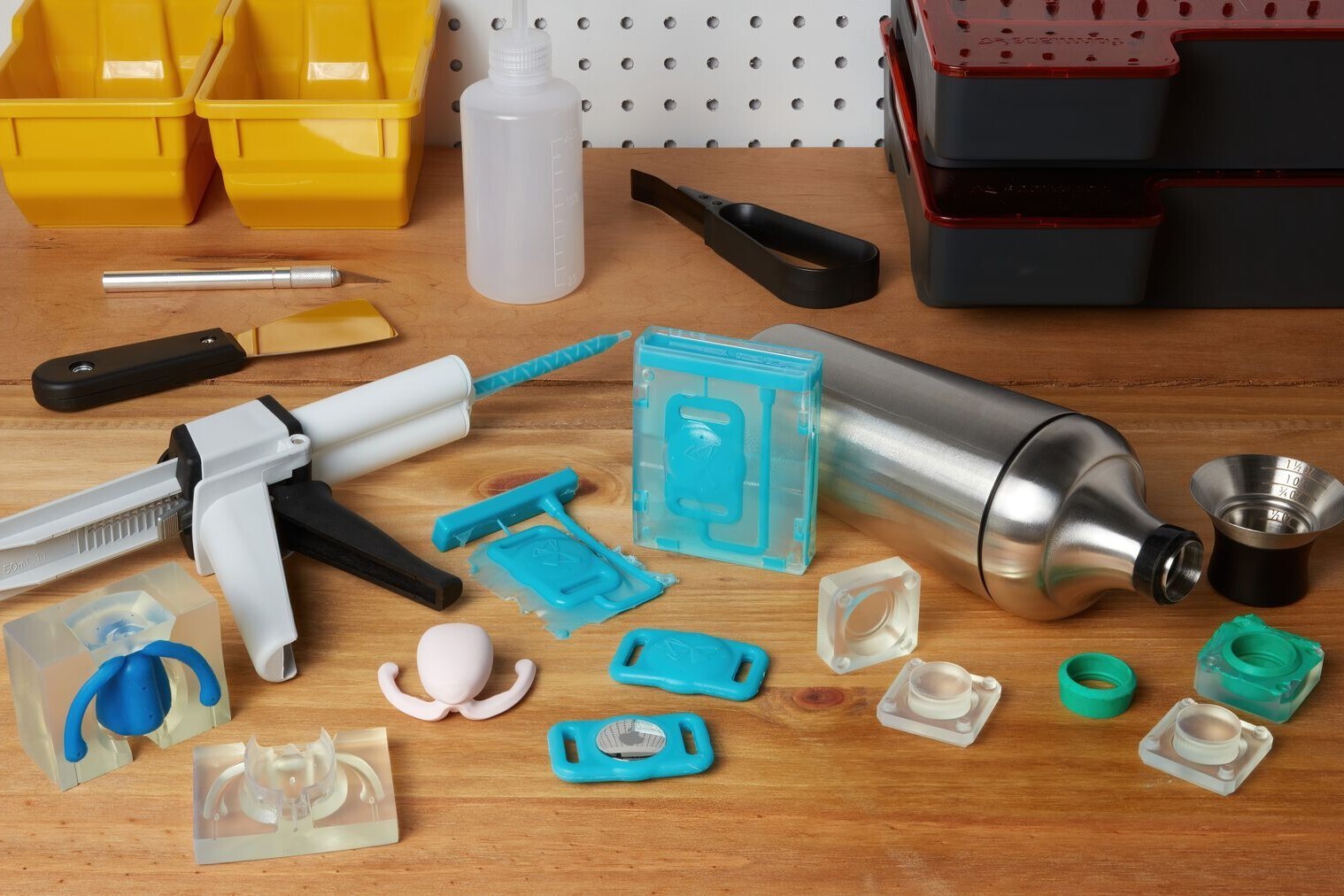
Urethane casting (vacuum casting) makes small batches of production-like plastic and rubber parts without an expensive steel tool. A high-quality master pattern is used to make a silicone mould, and liquid polyurethane is cast into the mould to create each part.
Step 1Make the master
We 3D print a master pattern from your CAD file — usually in SLA resin for a smooth, detailed surface — and finish it to the quality you need.
Step 2Make the silicone mould
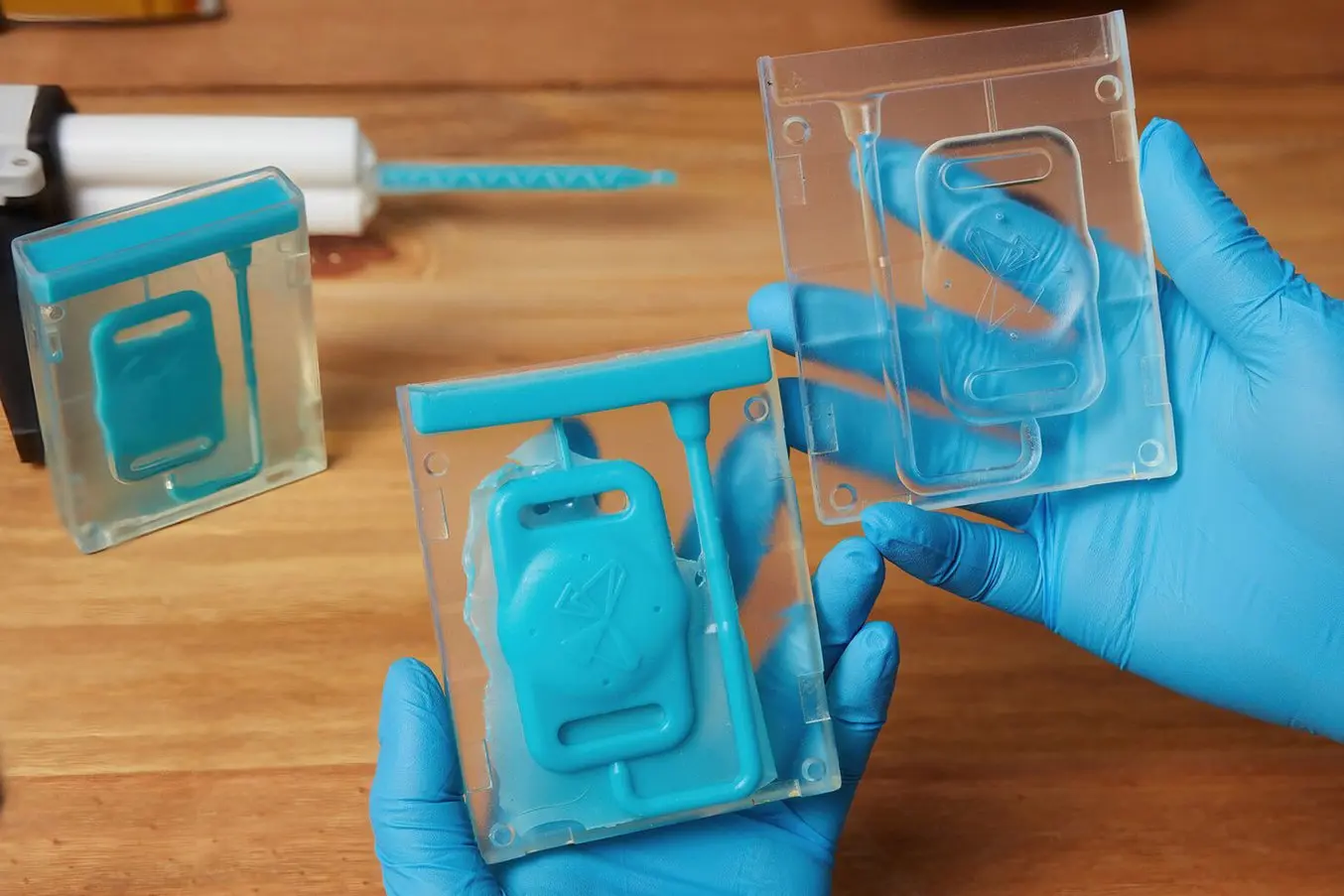
Silicone is poured around the master and cured. The mould is then cut open and the master removed, leaving an exact cavity.
Step 3Cast the parts
Polyurethane resin is cast into the mould, cured and removed. The mould is reused to cast the rest of the batch, and every part is inspected.
Urethane casting bridges the gap between one-off 3D printed prototypes and full injection-moulding production.
Production-like prototypes
Parts that look, feel and behave like moulded parts — for testing, trials and investor or customer samples.
Bridge and low-volume runs
Small batches of end-use parts while production tooling is still being made, or when volumes do not justify a steel tool.
Rubber and elastomer parts
Seals, grips, gaskets and soft-touch parts in silicone rubber or PU rubber.
Overmoulding and inserts
Combine materials — for example a soft grip over a rigid core — with overmoulding and insert moulding.
Compression moulding
3D printed moulds and patterns can also be used for compression-moulded rubber and silicone parts.
Cast polyurethanes are formulated to mimic common production plastics and rubbers.
| Material | What it mimics | Typical uses |
|---|
| ABS-like | Tough, rigid ABS | Housings, enclosures, consumer products |
| PP-like | Flexible, durable polypropylene | Clips, living hinges, containers |
| PC-like | Strong, impact-resistant polycarbonate | Covers, guards, structural parts |
| Acrylic-like | Clear, rigid acrylic | Lenses, light covers, transparent parts |
| PA-like | Tough nylon | Functional and mechanical parts |
| POM-like | Stiff, low-friction acetal | Gears, bushings, sliding parts |
| Silicone rubber | Soft, flexible silicone | Seals, gaskets, soft-touch parts |
| PU rubber | Tough, abrasion-resistant elastomer | Grips, rollers, bumpers |
What is urethane casting?
Urethane casting is a low-volume manufacturing process. A master pattern is used to make a silicone mould, and liquid polyurethane is cast into the mould to produce production-like plastic or rubber parts.
How many parts can be made by urethane casting?
Urethane casting is designed for small batches. Each silicone mould produces a limited number of parts before it wears, and new moulds can be made from the same master. For larger quantities, see low-volume production.
Urethane casting or 3D printing — which should I choose?
3D printing is fastest for one-off parts and design changes. Urethane casting is better when you need a batch of parts in production-like plastics or rubbers, or a moulded look and feel.
Do I need to supply a master pattern?
No. We can 3D print the master pattern from your CAD file. If you only have a physical part, we can 3D scan it and reverse-engineer a CAD model first.
Which materials can be cast?
We cast ABS-like, PP-like, PC-like, acrylic-like, PA-like and POM-like polyurethanes, plus silicone rubber and PU rubber.