
Learn · Materials
What Is ESD-Safe 3D Printing? Materials, Uses and Design Tips
A spark you can’t even feel can damage a circuit board. If your team assembles, tests or handles electronics, ordinary 3D printed jigs and trays can become part of the problem. ESD-safe materials fix that.
What is ESD, and why does it matter?
Electrostatic discharge (ESD) is the sudden flow of static electricity between two objects at different charge levels — the same effect as the small shock you sometimes feel from a door handle. Electronic components can be damaged by discharges far too small for a person to notice. Damage isn’t always immediate: a component can be weakened and fail later in the field.
Standard plastics are insulators. They can build up and hold static charge, so a normal 3D printed jig, tray or fixture used on an electronics line can put boards and components at risk.
Conductive, dissipative or insulative?
Materials are grouped by how easily charge moves across their surface, measured as surface resistance in ohms (Ω). A widely used classification (from the ANSI/ESD S541 packaging standard) is:
| Type | Surface resistance | What it does |
|---|---|---|
| Conductive | Below 1 × 10⁴ Ω | Charge moves very quickly — can discharge too fast for some sensitive parts |
| Static-dissipative | 1 × 10⁴ to below 1 × 10¹¹ Ω | Bleeds charge away in a slow, controlled way — the usual target for ESD-safe tooling |
| Insulative | 1 × 10¹¹ Ω and above | Holds charge — ordinary plastics |
“ESD-safe” 3D printing materials are typically static-dissipative. They contain conductive additives — often carbon-based, such as carbon nanotubes — blended through the whole material, so the protection doesn’t wear off like a surface coating can.
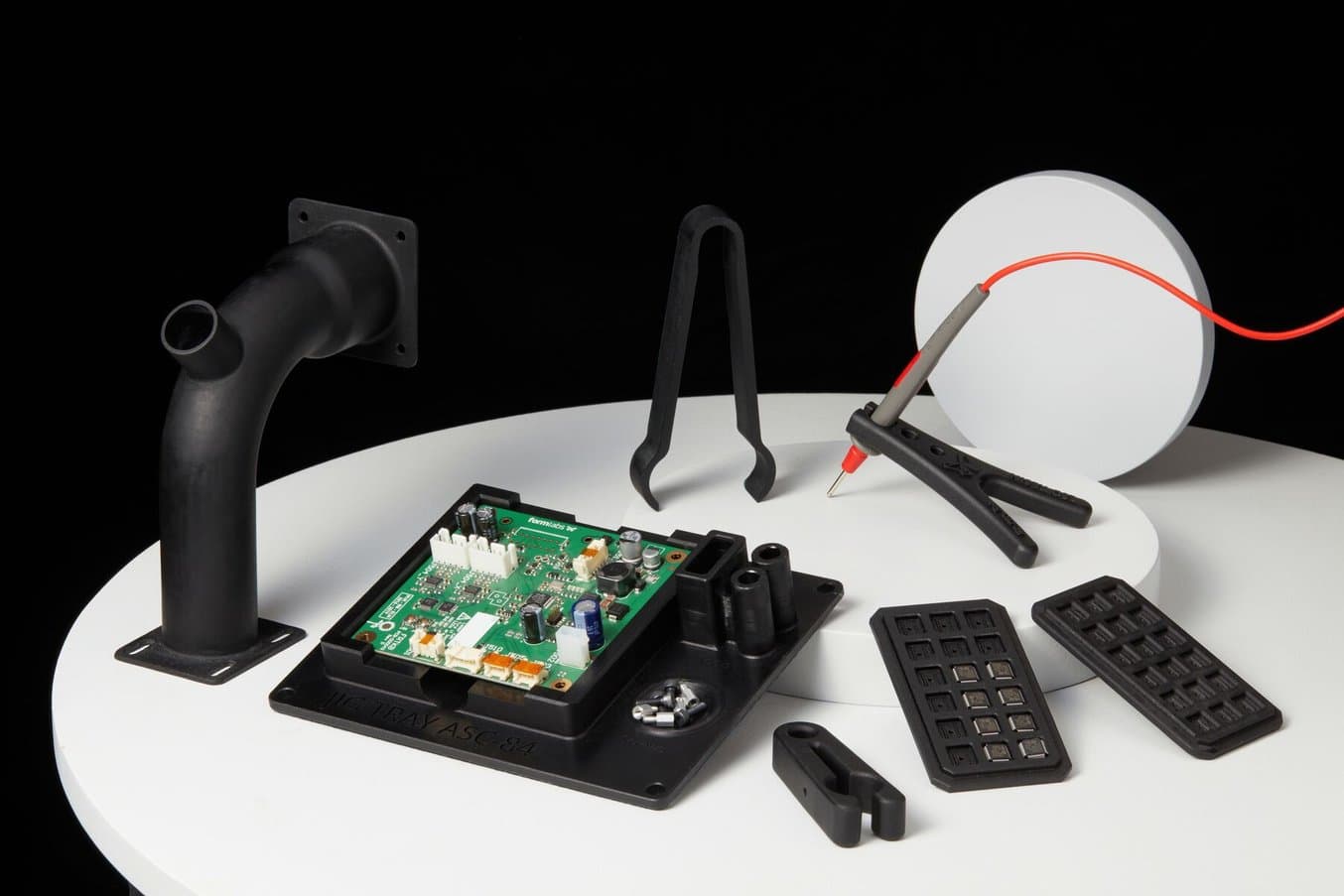
ESD-safe materials at Quick 3D
| Material | Process | Known for |
|---|---|---|
| ABS-ESD7 | FDM | Familiar ABS properties for general fixtures, holders and enclosures |
| PETG-ESD | FDM | Tough and easy to print, for trays, organisers and covers |
| PA612-ESD | FDM | Nylon toughness and wear resistance for working fixtures and jigs |
| ESD Resin | SLA | Static-dissipative with high modulus and impact strength similar to ABS; fine detail and smooth surfaces for precise tooling |
Learn more on our ESD-safe materials page.
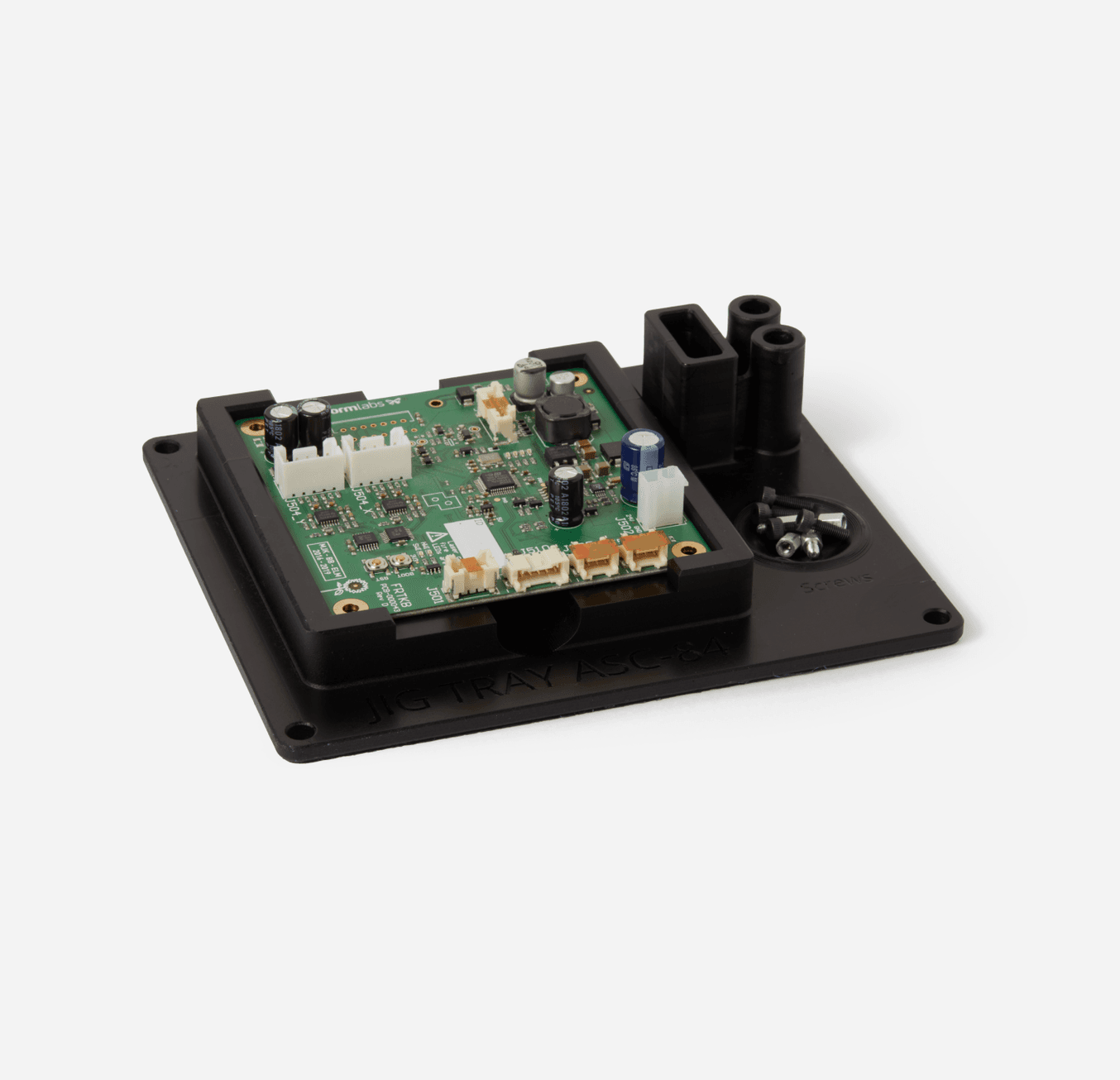
What can you make with ESD-safe 3D printing?
- Static-free tooling — jigs and fixtures for assembling and testing electronic components.
- Component holders — trays and organisers for storing and handling parts during assembly.
- Protective enclosures for machine controls, electronic systems and test equipment.
- Sensor housings and ECU covers for automotive electronics.
- Instrument and control panels for avionics and defence electronics.
- Device housings for medical and diagnostic equipment.
Because these parts are printed, each fixture can be shaped exactly around your board or component — and updated as soon as the design changes, without waiting for machined tooling.
Design and use tips
- Ground the fixture. A dissipative part needs a path to ground — through a grounded mat, bench or connection point — to carry charge away.
- Avoid insulating finishes. Paints, clear coats and some adhesives can cover the dissipative surface. Specify finishing carefully, or leave contact surfaces unfinished.
- Test before use. Measure surface resistance on the finished part as part of your ESD control programme.
- Don’t mix in ordinary plastics. A standard plastic insert or cover on an ESD-safe fixture can undo the protection.
- Match the material to the job. Choose SLA ESD Resin for fine, precise features, and FDM ESD grades for larger, tougher fixtures.
How Quick 3D can help
Tell us what the part needs to hold or protect, and how it will be used on your line. We’ll recommend an ESD-safe material and process, and design the fixture around your components if needed. See our ESD-safe materials or read about heat-resistant materials for parts that see high temperatures.
Making tooling for an electronics line? See 3D printing for electronics manufacturing for the jigs, fixtures, trays and enclosures we make.
Frequently asked questions
What does ESD-safe mean in 3D printing?
An ESD-safe 3D printing material is formulated to dissipate static charge in a controlled way instead of building it up, so printed parts don’t put sensitive electronic components at risk of electrostatic discharge.
What is the difference between conductive and static-dissipative?
Conductive materials let charge flow very quickly, while static-dissipative materials bleed it away more slowly and in a controlled way. Static-dissipative is the usual target for ESD-safe jigs, fixtures and trays.
Which ESD-safe materials can be 3D printed?
Quick 3D offers ESD-safe FDM materials including ABS-ESD7, PETG-ESD and PA612-ESD, and ESD Resin for SLA printing.
Does the ESD protection wear off?
In ESD-safe printing materials, the conductive additive is blended through the whole material rather than applied as a surface coating, so it doesn’t simply wear away. Covering the surface with paint or coatings can affect performance, so test finished parts as part of your ESD programme.
Protect your electronics line
Send us your board, component or fixture design. We’ll recommend the right ESD-safe material and process.
Get a QuoteWhatsApp Us