
End-use parts without tooling, from ten to thousands.
When volumes are too low for injection moulding — or you need parts before your tool is ready — Quick 3D produces end-use parts by 3D printing and urethane casting, with no tooling cost and no minimum order. Made in Shah Alam, Selangor, for manufacturers across Malaysia.
When small-volume production makes sense
Bridge production
Supply parts while injection-moulding tools are still being made, so launches are not delayed.
Low-volume products
Products where volumes never justify the cost of a steel tool.
Customised and variant parts
Many versions of a part in one batch — no new tool for each variant.
Pilot runs and market tests
Real parts for trials, certification samples and early customers.
Spare and service parts
Produce parts on demand instead of holding stock. See spare parts & MRO.
Complex geometry
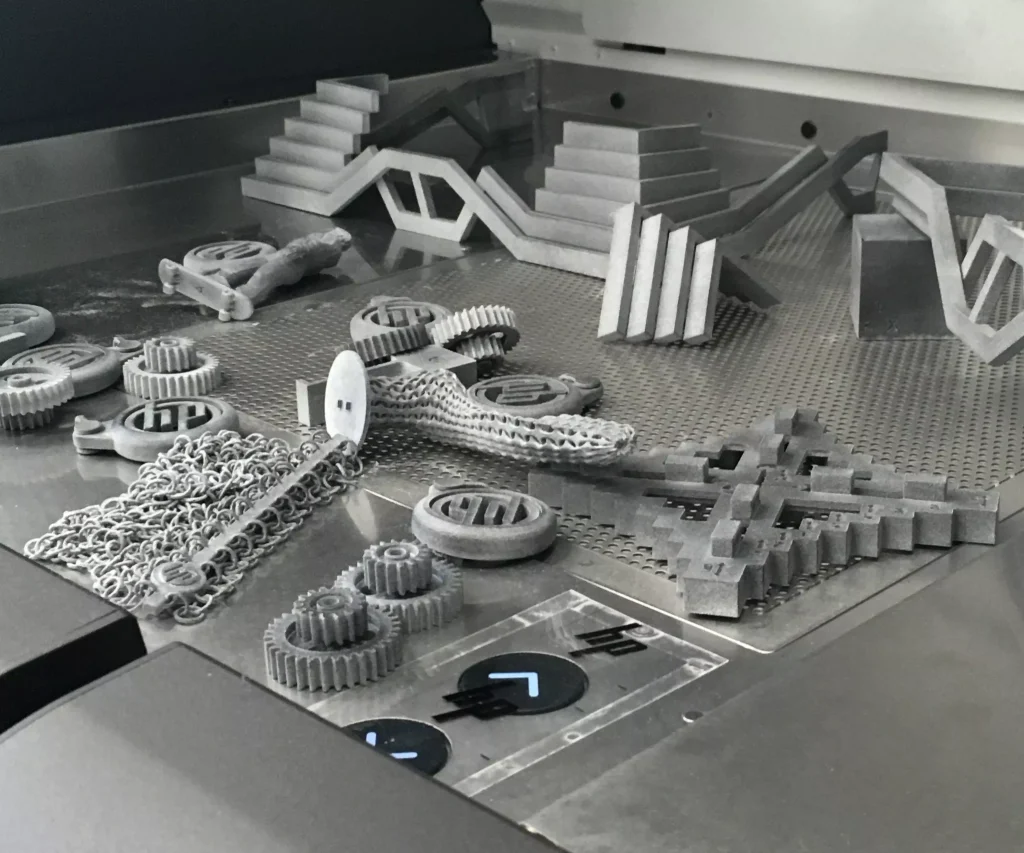
Lattices, internal channels and consolidated assemblies that moulding cannot make.
Recommended processes
MJF
Dense, isotropic HP PA12, PA11 and TPU parts — consistent across production batches.
Low-Volume Production
Scale from small batches up to 1,000 parts, with no minimum.
Why manufacturers choose Quick 3D
No tooling, no minimum
Order the quantity you need — one part or a batch — with no tooling cost.
Scales with you
From small batches up to 1,000 parts, or many smaller line items in one order.
Inspected and documented
Every order is dimensionally and visually inspected. Material certifications, inspections and measurement reports are available.
Frequently asked questions
What is small-volume production?
Small-volume (low-volume) production means making end-use parts in quantities too low to justify injection-moulding tools — typically by 3D printing or urethane casting.
When is 3D printing cheaper than injection moulding?
At low volumes, because there is no tooling cost. As quantities grow, moulding becomes cheaper per part. Our 3D printing vs injection moulding guide explains the break-even point.
Which process is best for production parts?
MJF is a strong choice for consistent nylon parts in batches, SLS for complex nylon parts and a wide material range, and urethane casting for parts that need a moulded look and feel.
Is there a minimum order?
No. You can order a single part, and we can manufacture up to 1,000 parts.
Do you provide inspection reports?
Every order is dimensionally and visually inspected. Material certifications, inspections and measurement reports are available.
Plan your production run
Send your CAD file, target quantity and timeline. We’ll recommend the right process and quote per part.