
Medical device prototyping, from concept model to production aid.
Quick 3D supports medical device makers, healthcare manufacturers and clinical teams across Malaysia with clear, detailed prototypes, anatomical models and production tooling — with access to ISO 10993 biocompatible materials, made in Shah Alam, Selangor.
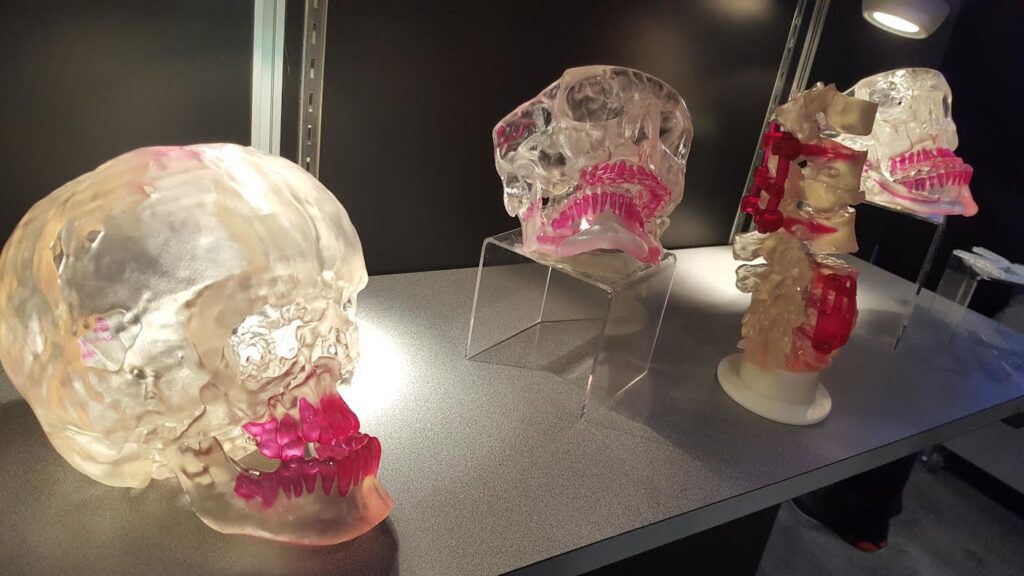
What we make for medical & healthcare teams
Device prototypes
Test the form, fit and ergonomics of handheld devices, housings and components before committing to tooling.
Clear & fluidic parts
Transparent SLA parts, polished to glass-like clarity, for visualising fluid flow and micro-fluidic manifolds.
Anatomical models
Full-colour, multi-material PolyJet models for planning, training and communication.
Orthotics & mobility aids
3D scanning captures the body for custom-fit orthotics, prosthetics and mobility assistance.
Production jigs & fixtures
Assembly, inspection and handling tools for medical device production lines.
ESD-safe enclosures
Static-free enclosures for medical devices and diagnostic equipment.
Recommended processes
PolyJet
Full colour, transparent and rubber-like materials combined in a single print for realistic models.
3D Scanning
Capture body shapes or existing devices for custom fits and reverse engineering.
Why engineering teams choose Quick 3D
Biocompatible materials
Our material library includes ISO 10993 biocompatible materials, with full traceability and TDS and SDS documentation.
Fast lead times
FDM parts in as little as 1 day, SLA in 3 days, and SLS, MJF, PolyJet and metal in as little as 7 days.
Inspected and protected
Every order is dimensionally and visually inspected, and we sign NDAs to protect your designs.
Frequently asked questions
Do you offer biocompatible 3D printing materials?
Yes. Our material library includes ISO 10993 biocompatible materials with full traceability. Tell us your application and we will recommend a suitable material and share its documentation.
Can 3D printed parts be used in a medical device?
It depends on the device and how the part is used. We can supply material certifications, data sheets and inspection reports, but validation and regulatory approval of the finished device remain the responsibility of the device manufacturer.
What medical applications is 3D printing used for?
Common uses include device prototypes, clear fluidic parts, full-colour anatomical models, custom orthotics made from 3D scans, and jigs and fixtures for device production lines.
Can you make clear, transparent parts?
Yes. Clear SLA resins can be sanded, polished and clear-coated for glass-like transparency — useful for seeing fluid flow inside a part. Compare SLA and PolyJet.
How quickly can you deliver medical prototypes?
FDM parts can be ready in as little as 1 day, SLA parts in 3 days, and PolyJet, MJF and SLS parts in as little as 7 days, depending on size, quantity and finishing.
Will you sign an NDA?
Yes. We can sign an NDA before you share device designs or drawings.
Start your project
Share your CAD file, drawing or concept. Our engineers will recommend the right process, material and cost. Guide: ISO 10993 and USP Class VI explained →