
Learn · Materials
PA11 vs PA12 Nylon: Which Is Right for Your Functional Parts?
PA11 and PA12 are the two nylons behind most functional SLS and MJF parts. They look almost identical on a datasheet at first glance — but the way they bend, break and hold their shape is different, and that difference decides which one your part needs.
The short answer
- Choose PA12 for stiff, dimensionally stable parts: housings, brackets, enclosures, jigs and fixtures, and most general-purpose functional parts.
- Choose PA11 when the part must flex, take impacts or survive repeated bending without cracking: snap-fits, clips, living hinges and parts that get dropped or knocked.
What are PA11 and PA12?
Both are polyamides (nylons) supplied as fine powders for powder-bed 3D printing. In SLS a laser sinters the powder; in MJF fusing agents and heat fuse it. Neither process needs support structures, so both nylons are ideal for complex, functional parts. The numbers in the names refer to the number of carbon atoms in the polymer’s building blocks — which changes how the material behaves.
- PA12 is the most widely used powder-bed nylon. It is strong, stiff, chemically resistant and dimensionally stable — an excellent all-rounder.
- PA11 is made from a renewable, plant-based source (castor oil). It is more ductile than PA12, with higher elongation at break and better impact resistance.
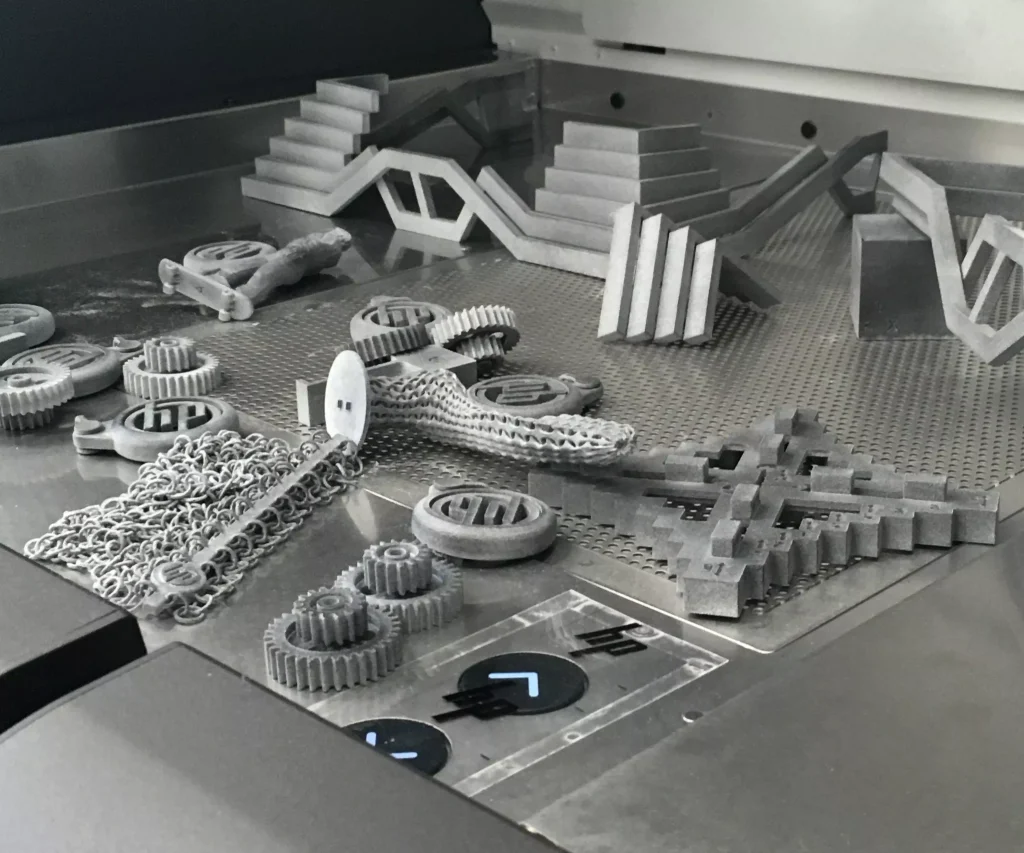
PA11 vs PA12 side by side
| PA12 | PA11 | |
|---|---|---|
| Stiffness | Higher — holds its shape under load | Lower — flexes more before yielding |
| Ductility & elongation | Good | Higher — bends further before breaking |
| Impact resistance | Good | Better, especially for repeated knocks |
| Dimensional stability | Excellent — a strong choice for accurate, rigid parts | Very good |
| Chemical resistance | Good resistance to oils, greases, fuels and many solvents | Good, similar to PA12 |
| Source | Petroleum-based | Bio-based (castor oil) |
| Best for | Housings, brackets, enclosures, jigs, fixtures, general functional parts | Snap-fits, clips, living hinges, impact-prone and flexing parts |
Exact values depend on the process (SLS or MJF), the specific grade and the print orientation, so check the material datasheet for the grade you use — we can share the datasheet with your quote.
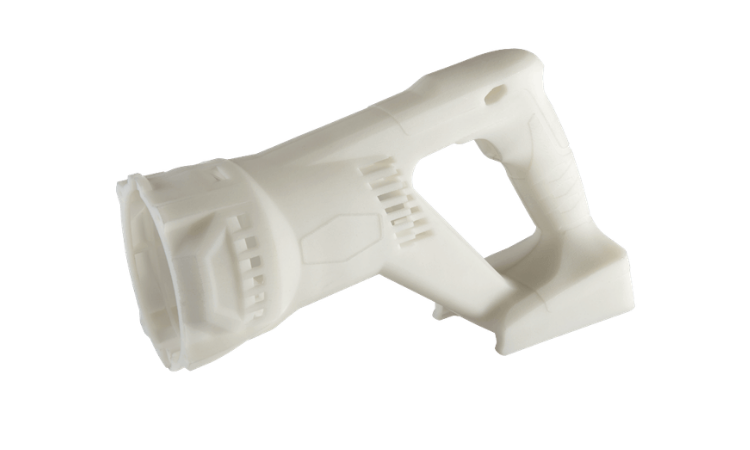
Which should you choose? Real examples
Choose PA12 for…
- Enclosures and housings that must keep their shape and fit with other parts.
- Jigs, fixtures and production aids where stiffness and repeatability matter.
- Ducts, brackets and mounts that carry steady loads.
- Batches of identical parts, where its stability gives consistent results.
Choose PA11 for…
- Snap-fits and clips that are assembled and released many times.
- Living hinges and thin features that must flex without cracking.
- Parts that take impacts: protective covers, handles, sports and consumer products.
- Projects where a bio-based material matters to your sustainability goals.
When neither is quite right
PA11 and PA12 cover most needs, but several other materials are available for SLS and MJF:
- Glass-filled nylon (PA12 Glass Beads on MJF; glass-filled PA6 and PA12 on SLS) — stiffer and more dimensionally stable, for parts that must not deflect. Less flexible than unfilled nylon.
- Carbon-filled PA6 (SLS) — high stiffness and strength for its weight, for structural and lightweight parts.
- TPU (SLS and MJF) — a rubber-like flexible material for seals, grips, cushioning and lattices.
- PEEK (SLS) — a high-performance polymer for demanding heat and chemical environments. See our guide to heat-resistant 3D printing materials.
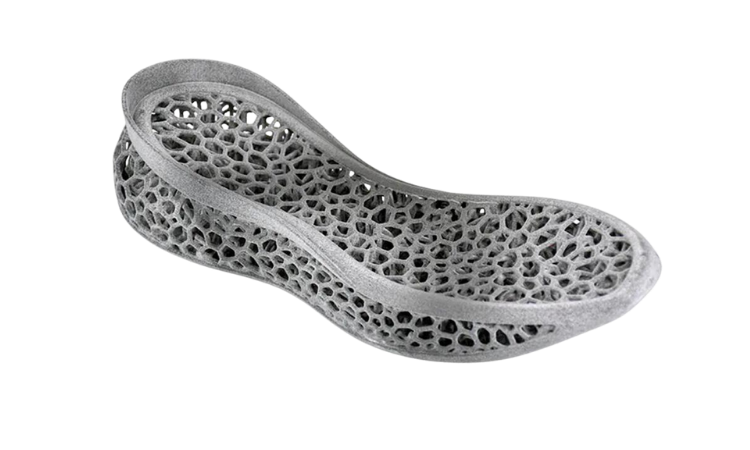
Design tips for nylon parts
- Keep walls reasonably thick. Very thin walls can warp, and thin features are more fragile.
- Add fillets at corners. Rounded transitions spread stress and make snap-fits last longer.
- Add escape holes to hollow parts so unfused powder can be removed.
- Leave clearance between moving parts printed as one assembly so they don’t fuse together.
- Plan the finish. Nylon parts have a slightly grainy surface; they can be dyed, bead-blasted, vapour-smoothed or painted.
How Quick 3D can help
We offer PA11 and PA12 on both SLS and MJF, alongside glass- and carbon-filled nylons, TPU and PEEK. Not sure which fits? Send us your part and how it will be used, and we’ll recommend the material and process. Compare the processes in our FDM vs SLA vs SLS vs MJF guide.
Frequently asked questions
Is PA11 stronger than PA12?
Not simply “stronger”. PA12 is stiffer and more dimensionally stable, while PA11 is more ductile, bending further before it breaks and handling impacts better. The right choice depends on whether your part needs rigidity or toughness.
Is PA12 the same as Nylon 12?
Yes. PA12 (polyamide 12) and Nylon 12 are the same family of material. Likewise, PA11 is Nylon 11.
Can PA11 and PA12 be printed with both SLS and MJF?
Yes. Quick 3D offers both PA11 and PA12 on SLS and on MJF. Choosing between the processes depends on your part, quantity and finish.
Is PA11 more sustainable than PA12?
PA11 is made from a renewable, plant-based source (castor oil), while PA12 is petroleum-based. If a bio-based material matters to your project, PA11 is the natural choice.
Not sure which nylon your part needs?
Send us your 3D file and tell us how the part will be used. We’ll recommend the right nylon and process.
Get a QuoteWhatsApp Us