Learn · Comparisons
Urethane Casting vs Injection Moulding for Low-Volume Production
You need real, production-like plastic parts — but not tens of thousands of them. Should you invest in an injection-moulding tool, or cast your parts in urethane? Here is how the two compare on cost, lead time, materials and quality.
How urethane casting works
- Make the master. We 3D print a master pattern from your CAD file, usually in SLA resin for a smooth, detailed surface, and finish it to the quality you need.
- Make the silicone mould. Silicone is poured around the master and cured. The mould is cut open and the master removed, leaving an exact cavity.
- Cast the parts. Polyurethane resin is cast into the mould, cured and removed. The mould is reused for the rest of the batch, and every part is inspected.
Each silicone mould produces a limited number of parts before it wears, and new moulds can be made from the same master. Learn more about our urethane casting service.
How injection moulding works
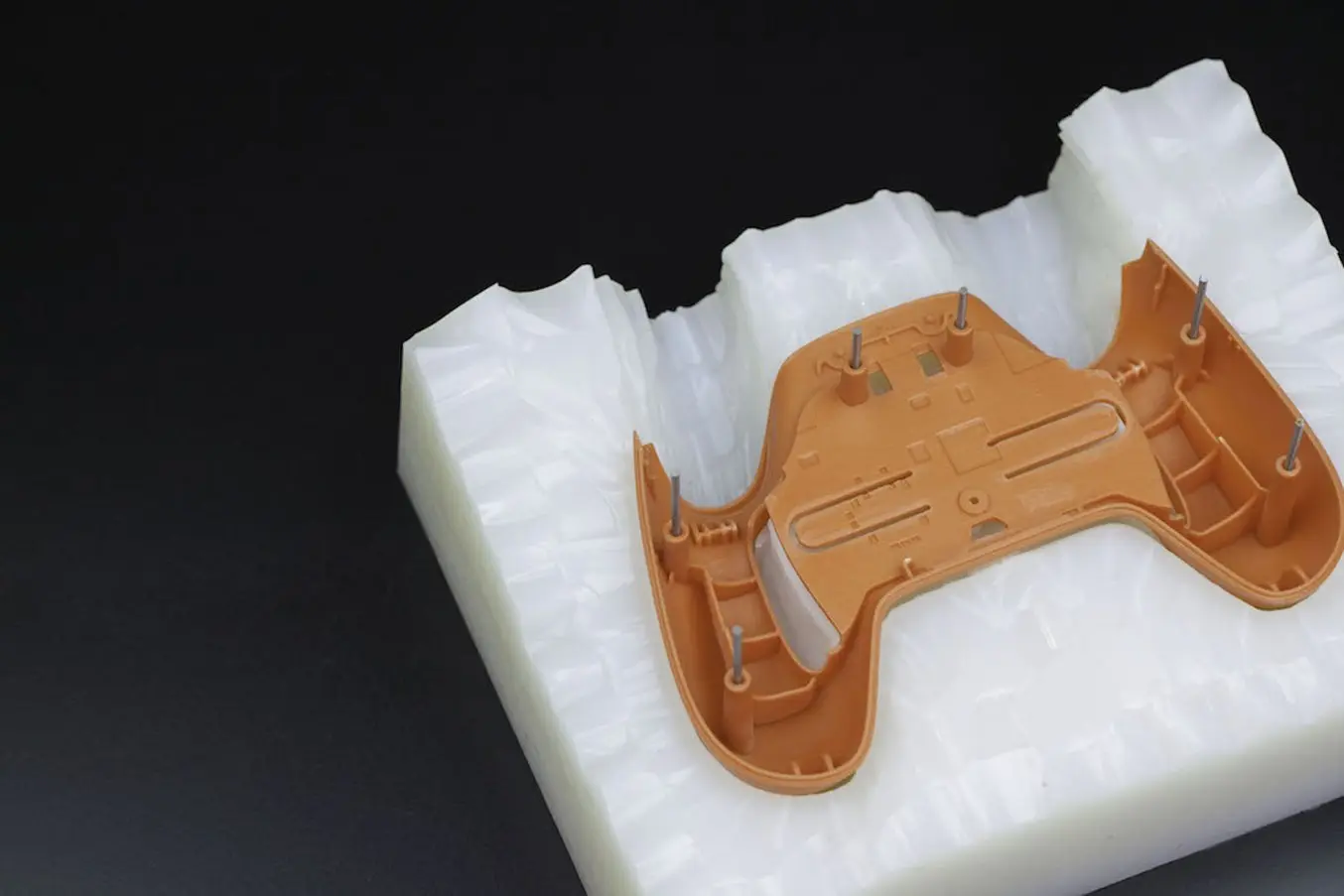
Molten thermoplastic is injected under high pressure into a machined metal tool, usually steel or aluminium. Once the tool exists, each part takes seconds to make and costs very little. The catch is the tool itself: it is expensive, takes weeks to machine, and is costly to change once cut.
Urethane casting vs injection moulding at a glance
| Urethane casting | Injection moulding | |
|---|---|---|
| Tooling | Low-cost silicone moulds from a 3D printed master | Machined steel or aluminium tool with a high upfront cost |
| Lead time to first parts | Short — no metal tool to machine | Weeks, because the tool must be made first |
| Best quantity | Small batches, pilot runs and bridge production | High volumes, where tooling cost is spread across many parts |
| Cost per part | Higher per part, but no large tool investment | Very low per part once the tool is paid for |
| Materials | Polyurethanes that mimic ABS, PP, PC, acrylic, nylon and POM, plus silicone and PU rubber | The actual production thermoplastics |
| Design changes | Easy — update the CAD and print a new master | Slow and costly — the tool must be modified |
| Look and feel | Production-like surface, colour and texture | True production parts |
When urethane casting makes sense
- Bridge production. Supply parts while the injection-moulding tool is still being made, so your launch is not delayed.
- Volumes that never justify a tool. Niche products, spare parts and equipment built in small numbers.
- Production-like prototypes. Parts that look, feel and behave like moulded parts for testing, trials, certification samples and customer demos.
- Rubber and soft-touch parts. Seals, grips, gaskets and overmoulded parts in silicone or PU rubber.
- Designs that may still change. A new master is far cheaper than modifying a steel tool.
When injection moulding makes sense
- The design is frozen and has been validated with prototypes.
- Volumes are high enough that the tool cost per part becomes small.
- You need the exact production polymer, for example for a specific certification or material specification.
Urethane casting materials
| Material | What it mimics | Typical uses |
|---|---|---|
| ABS-like | Tough, rigid ABS | Housings, enclosures, consumer products |
| PP-like | Flexible, durable polypropylene | Clips, living hinges, containers |
| PC-like | Strong, impact-resistant polycarbonate | Covers, guards, structural parts |
| Acrylic-like | Clear, rigid acrylic | Lenses, light covers, transparent parts |
| PA-like | Tough nylon | Functional and mechanical parts |
| POM-like | Stiff, low-friction acetal | Gears, bushings, sliding parts |
| Silicone rubber | Soft, flexible silicone | Seals, gaskets, soft-touch parts |
| PU rubber | Tough, abrasion-resistant elastomer | Grips, rollers, bumpers |
Other low-volume options
3D printed production with MJF or SLS makes end-use nylon parts with no tooling at all — ideal when the design suits nylon. Rapid tooling uses 3D printed moulds and patterns for short runs of moulded, compression-moulded or thermoformed parts. And when quantities grow, our low-volume production service handles batches of up to 1,000 parts. For a wider comparison, read 3D printing vs injection moulding.
Frequently asked questions
Is urethane casting cheaper than injection moulding?
For small batches, usually yes, because there is no expensive steel tool. Each cast part costs more than a moulded part, so injection moulding becomes cheaper once volumes are high enough to spread the tool cost.
How many parts can one silicone mould make?
Each silicone mould makes a limited number of parts before it wears, depending on the part geometry and material. New moulds can be made from the same master, so larger batches are still possible.
Are urethane cast parts as strong as injection-moulded parts?
Cast polyurethanes are formulated to mimic production plastics such as ABS, PP, PC and nylon, and are suitable for functional testing and many end uses. If you need the exact production polymer for a certification, injection moulding is the better choice.
Can urethane casting be used for bridge production?
Yes. Urethane casting is commonly used to supply parts while injection-moulding tools are still being made, so product launches are not delayed.
Do I need to supply a master pattern?
No. We 3D print the master from your CAD file. If you only have a physical part, we can 3D scan it and create a CAD model first.
Planning a low-volume run?
Send your CAD file, target quantity and timeline. We will compare urethane casting with the other options and quote per part.
Get a QuoteWhatsApp Us