
Learn · Processes
Silicone Moulds from 3D Printed Masters: How They’re Made
From chocolate and cake moulds to soap, candle and plaster moulds, custom silicone moulds start with one thing: a precise master. 3D printing makes that master fast, detailed and easy to change.
What is a silicone mould?
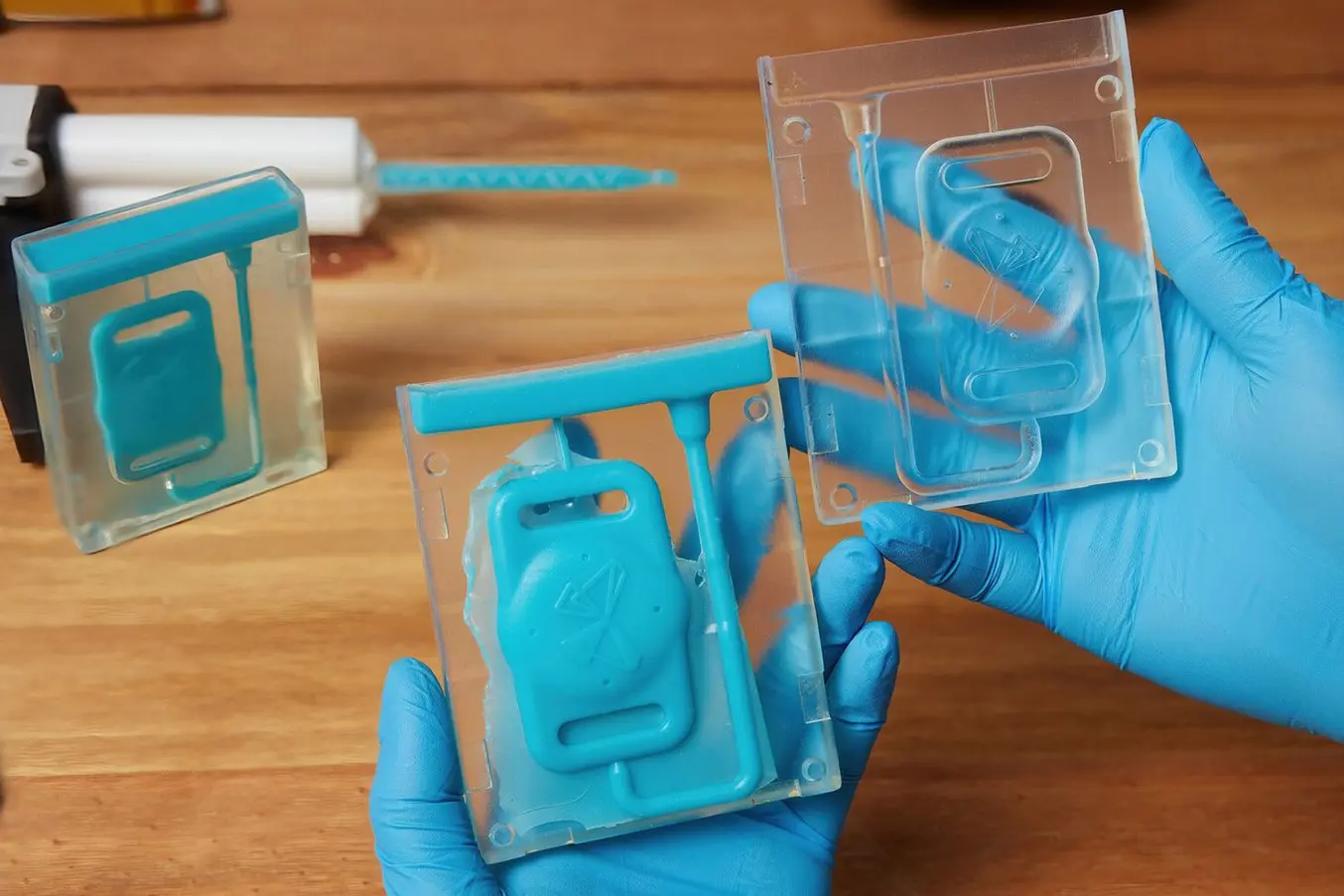
A silicone mould is a flexible negative of a shape. You pour a liquid material into it — chocolate, wax, soap base, plaster, resin or polyurethane — let it set, then peel the flexible silicone away to release the part. Silicone captures very fine detail and bends around small undercuts, which makes it ideal for decorative and organic shapes that would be difficult or impossible to release from a rigid mould.
Why use a 3D printed master?
Every silicone mould is made from a master — the original shape the mould copies. Traditionally, masters were hand-sculpted or machined. 3D printing changes that:
- Speed: go from a CAD file or 3D scan to a physical master quickly, without carving or machining.
- Detail: high-resolution processes such as SLA reproduce fine text, logos and textures.
- Easy iteration: change the design file and print a new master — no need to start from scratch.
- Consistency: print the same master again to make replacement or additional moulds.
How a silicone mould is made, step by step
- Design the part. Create or refine the 3D model — or 3D scan an existing object.
- Print and finish the master. The master is 3D printed, then sanded or polished. Silicone copies the surface exactly, so any layer lines or marks left on the master will appear on every cast.
- Prepare the mould box. The master is fixed inside a box, with pour and vent channels planned for the casting material.
- Pour the silicone. Liquid silicone is mixed, often degassed to remove bubbles, and poured over the master.
- Cure and demould. Once cured, the silicone is removed from the box and the master is released, leaving a ready-to-use mould. Two-part moulds are used for fully three-dimensional shapes.
Tin-cured vs platinum-cured silicone
Mould-making silicones are grouped by how they cure. Quick 3D offers both types:
| Tin-cured (condensation) | Platinum-cured (addition) | |
|---|---|---|
| Cost | Lower | Higher |
| Shrinkage & accuracy | Shrinks slightly more as it cures | Very low shrinkage; more accurate |
| Mould life | Shorter; can become brittle over time | Longer-lasting |
| Food contact | Not used for food | The type used for food-safe moulds (when the grade is certified for food contact) |
| Best for | Plaster, candle, soap and resin moulds on a budget | Chocolate, cake and other food moulds; long-life or high-accuracy moulds |
Soft or firm? Choosing 15A or 30A
Silicone hardness is measured on the Shore A scale. Quick 3D offers both tin-cured and platinum-cured silicone in 15A and 30A:
- Shore 15A is softer and stretchier. It peels away easily from complex shapes, deep details and small undercuts.
- Shore 30A is firmer. It holds its shape better, so it suits larger moulds and simpler shapes that need more support.
What can you make with silicone moulds?
- Food moulds: chocolate, cake, pastry and confectionery moulds in food-contact grades — see our F&B mould service.
- Industrial and craft moulds: soap, plaster, candle and resin moulds.
- Urethane casting moulds: silicone moulds for casting polyurethane plastic and rubber parts in low volumes — see what is urethane casting.
Design tips for better silicone moulds
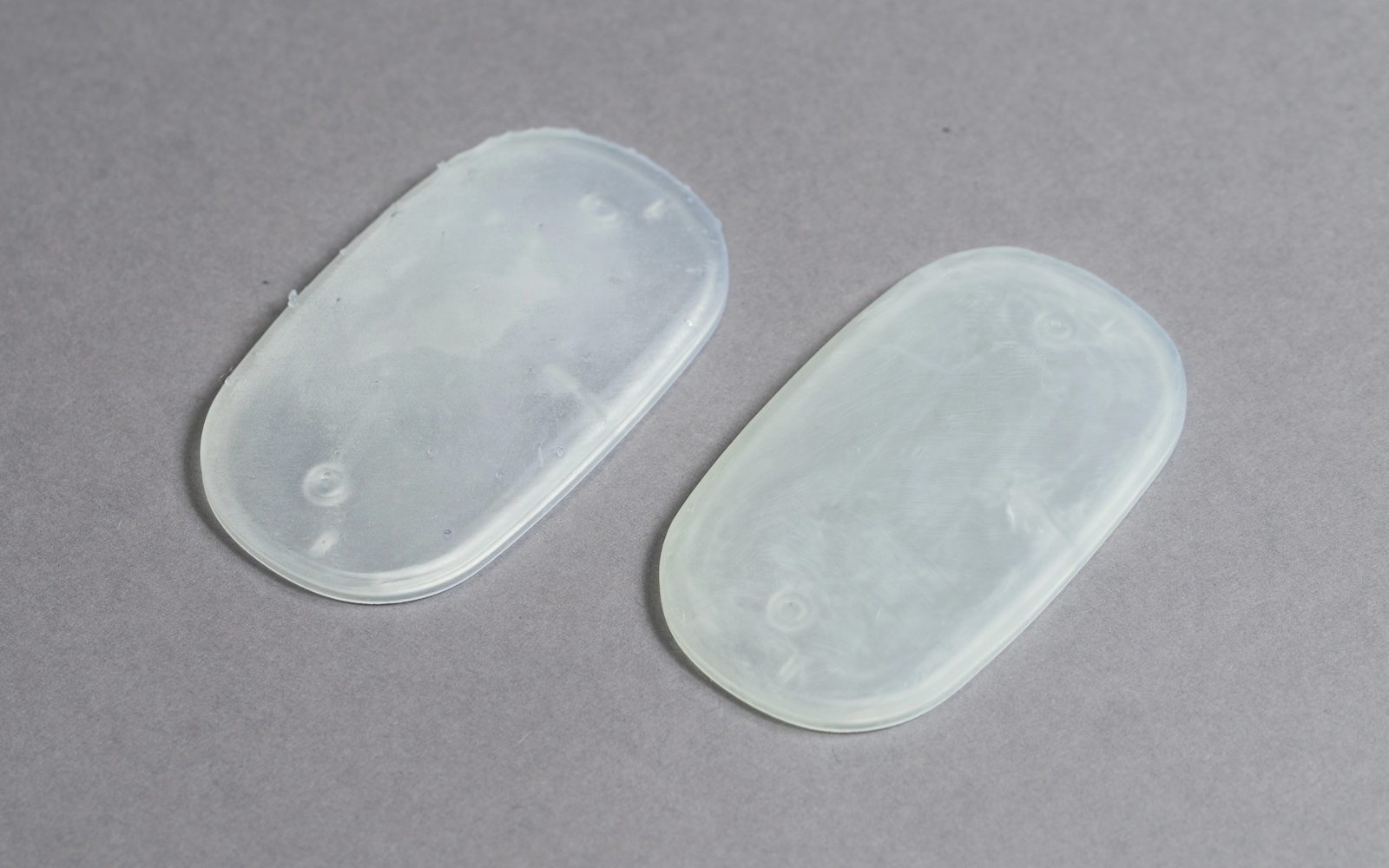
- Finish the master to the finish you want. Glossy master, glossy casts; matte master, matte casts.
- Avoid very thin, tall features. They can tear the silicone or break when demoulding.
- Add small radii to sharp edges. They make casts release more cleanly and extend mould life.
- Think about pouring. Plan where material goes in and where air escapes, especially for deep or detailed shapes.
- Size your logo text. Very fine text may not fill completely with thick materials such as chocolate.
How Quick 3D can help
We follow every phase of the project — design, prototyping and production — and specialise in platinum silicone moulding for silicone and thermoplastic products. Send us a sketch, a 3D file or a physical sample, and we’ll handle the master, the mould and the casting. Learn more about our silicone moulding service.
Frequently asked questions
Are silicone moulds food safe?
Food-contact moulds are made from platinum-cured silicone grades that are certified for food contact. Tin-cured silicone is not used for food.
What is the difference between Shore 15A and 30A silicone?
Shore 15A silicone is softer and easier to peel away from detailed shapes. Shore 30A is firmer and holds its shape better, which suits larger and simpler moulds.
Can you make a silicone mould from my existing product?
Yes. An existing object can be 3D scanned and turned into a CAD model, then 3D printed as a master — or used directly as a master if it is suitable.
Why are masters 3D printed?
3D printing produces detailed masters quickly from a digital file, makes design changes easy, and lets you print an identical master again whenever you need a new mould.
Need a custom silicone mould?
Send us your design, sketch or sample. We’ll recommend the right silicone, hardness and mould design for your product.
Get a QuoteWhatsApp Us