
Learn · Processes
What Is Urethane Casting? A Guide for Low-Volume Parts
Need tens of parts that look and feel like injection-moulded production parts — but can’t justify the cost and wait of a steel mould? Urethane casting is built for exactly that gap.
Urethane casting in one sentence
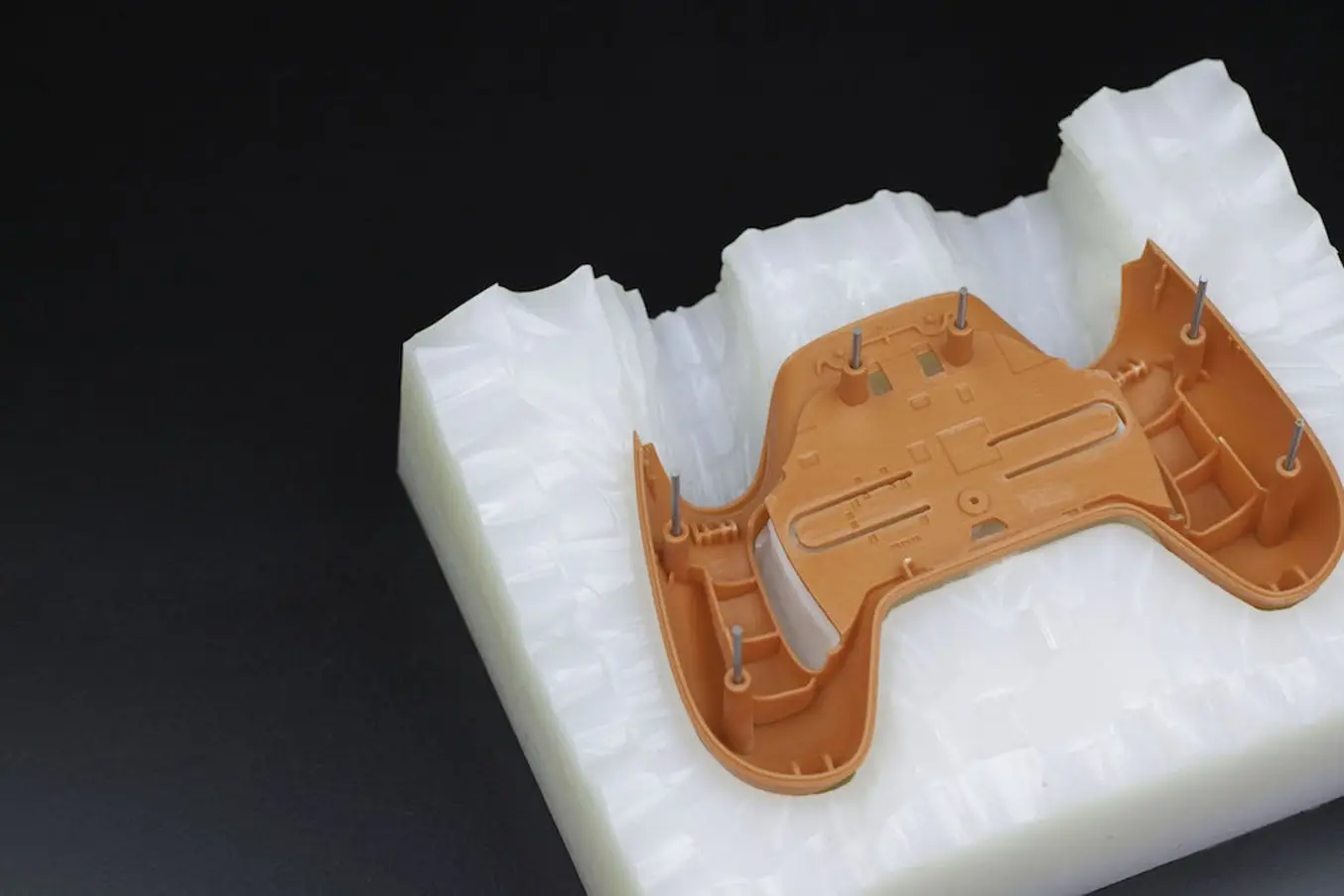
Urethane casting (also called polyurethane casting, vacuum casting or silicone rubber casting) makes plastic and rubber parts by pouring liquid polyurethane resin into a soft silicone mould that was formed around a master pattern — usually a 3D printed part.
Because the mould is silicone instead of machined steel or aluminium, it is fast and inexpensive to make. The trade-off is that each mould only lasts for a limited number of casts, which is why urethane casting is a low-volume process.
How urethane casting works
- Make the master pattern. A master is 3D printed — typically in SLA resin for a smooth surface — then sanded and finished. Every detail on the master, good or bad, will be copied into every part.
- Build the silicone mould. The master is suspended in a mould box with gates and vents added, and liquid silicone is poured around it and cured.
- Cut and open the mould. The cured silicone is cut along a planned parting line and the master is removed, leaving an accurate cavity.
- Cast the parts. A two-part polyurethane resin is mixed — often coloured at this stage — and poured into the closed mould. Casting is commonly done under vacuum to pull out air bubbles.
- Cure, demould and finish. After curing, the flexible mould is opened, the part is removed, and gates are trimmed. Parts can then be painted, textured or assembled.
What materials can urethane casting mimic?
Casting resins are formulated to imitate the look and behaviour of common production plastics and rubbers. At Quick 3D, urethane casting materials include:
| Family | Materials | Typical uses |
|---|---|---|
| Rigid thermoplastic-like | ABS-like, PP-like, PC-like, PA-like, POM-like | Housings, enclosures, brackets, clips, functional prototypes |
| Clear | Acrylic-like | Lenses, light covers, display and see-through parts |
| Elastomer rubber | Silicone rubber, PU rubber | Seals, gaskets, grips, buttons, soft-touch parts |
“-like” matters: these resins resemble the named plastic, but they are not identical to it. If your part must pass a test in the exact production material, confirm the cast material’s properties first.
Urethane casting vs 3D printing vs injection moulding
| 3D printing | Urethane casting | Injection moulding | |
|---|---|---|---|
| Tooling | None | Low-cost silicone mould | Expensive steel or aluminium mould |
| Best quantity | One-offs to small batches | Tens of parts, small batches | Thousands and up |
| Look & feel | Depends on process; layer lines in some | Close to moulded parts; colours and textures | Production finish |
| Soft rubber parts | Limited options | Excellent | Excellent |
| Design changes | Instant — just change the file | New master and mould | Costly tool modification |
When urethane casting is the right choice
- Bridge production — parts to sell or test while injection mould tooling is being made.
- Pre-production and pilot runs for user trials, certification samples or trade-show units.
- Marketing and investor samples that need production colours and finishes.
- Rubber and soft-touch parts such as seals, grips and keypads.
- Overmoulded or insert-moulded parts, where rubber is cast over a rigid part or around a metal insert.
- Need one or two parts quickly? 3D printing is faster and skips the mould.
- Need thousands of identical parts? Injection moulding will usually win on cost per part.
- Need the exact production polymer for testing? Use the real material.
Design tips for urethane casting
- Keep walls even. Uniform wall thickness reduces warping and sink marks.
- Add draft where you can. Silicone is flexible, so it tolerates undercuts better than steel tools — but a little draft still makes demoulding easier and extends mould life.
- Round internal corners. Fillets help resin flow and reduce stress in the part and mould.
- Plan the finish on the master. The mould copies the master’s surface exactly, so sand, texture or polish the master to the finish you want on every part.
- Tell us about inserts. Threaded inserts or rigid cores can be placed in the mould before casting.
How Quick 3D can help
Quick 3D combines 3D printed rapid tooling with traditional processes — casting, compression moulding, overmoulding and insert moulding — to produce limited quantities of plastic, silicone and rubber parts with a flexible, cost-efficient tooling process. See our urethane casting service, or read about silicone moulds from 3D printed masters.
Frequently asked questions
What is the difference between urethane casting and vacuum casting?
They usually refer to the same process. “Vacuum casting” describes pouring the polyurethane resin under vacuum to remove air bubbles; “urethane casting” describes the material being cast.
How many parts can one silicone mould make?
A silicone mould wears out after a limited number of casts — typically tens of parts rather than thousands. Mould life depends on the part geometry, the resin and how much the mould has to flex during demoulding. For larger quantities, a new mould is made from the same master.
Is urethane casting cheaper than injection moulding?
For low volumes, usually yes, because the silicone mould costs far less than a machined steel or aluminium tool. At high volumes, injection moulding becomes cheaper per part once its tooling cost is spread across many units.
Can urethane casting make rubber parts?
Yes. Elastomer resins such as silicone rubber and PU rubber can be cast for seals, gaskets, grips and soft-touch parts, and rubber can be overmoulded onto rigid parts.
Planning a low-volume run?
Send us your 3D file, quantity and material requirements. Our engineers will tell you whether urethane casting, 3D printing or another process is the best fit.
Get a QuoteWhatsApp Us