
Learn · Industry Applications
Spare Parts on Demand: 3D Printing for Oil & Gas MRO
When equipment stops because of a part you can’t buy, every hour counts. For maintenance, repair and operations (MRO) teams, 3D printing turns “discontinued” and “weeks away” into a part made from a file — often in days.
The MRO problem
Oil and gas operations depend on equipment that often runs for decades. Over that time, spare parts become a challenge:
- Obsolete parts — the original manufacturer no longer makes them, or no longer exists.
- No drawings — documentation was lost, or the part was never fully documented.
- Long lead times and minimum orders for traditional machining or casting, when you only need one or two.
- Expensive stock — holding physical spares “just in case” ties up money and warehouse space.
Meanwhile, unplanned downtime is costly. That is where on-demand 3D printing fits.
How 3D printing helps
- Make parts from what you have. We produce spare parts on demand from drawings, CAD files or 3D scans.
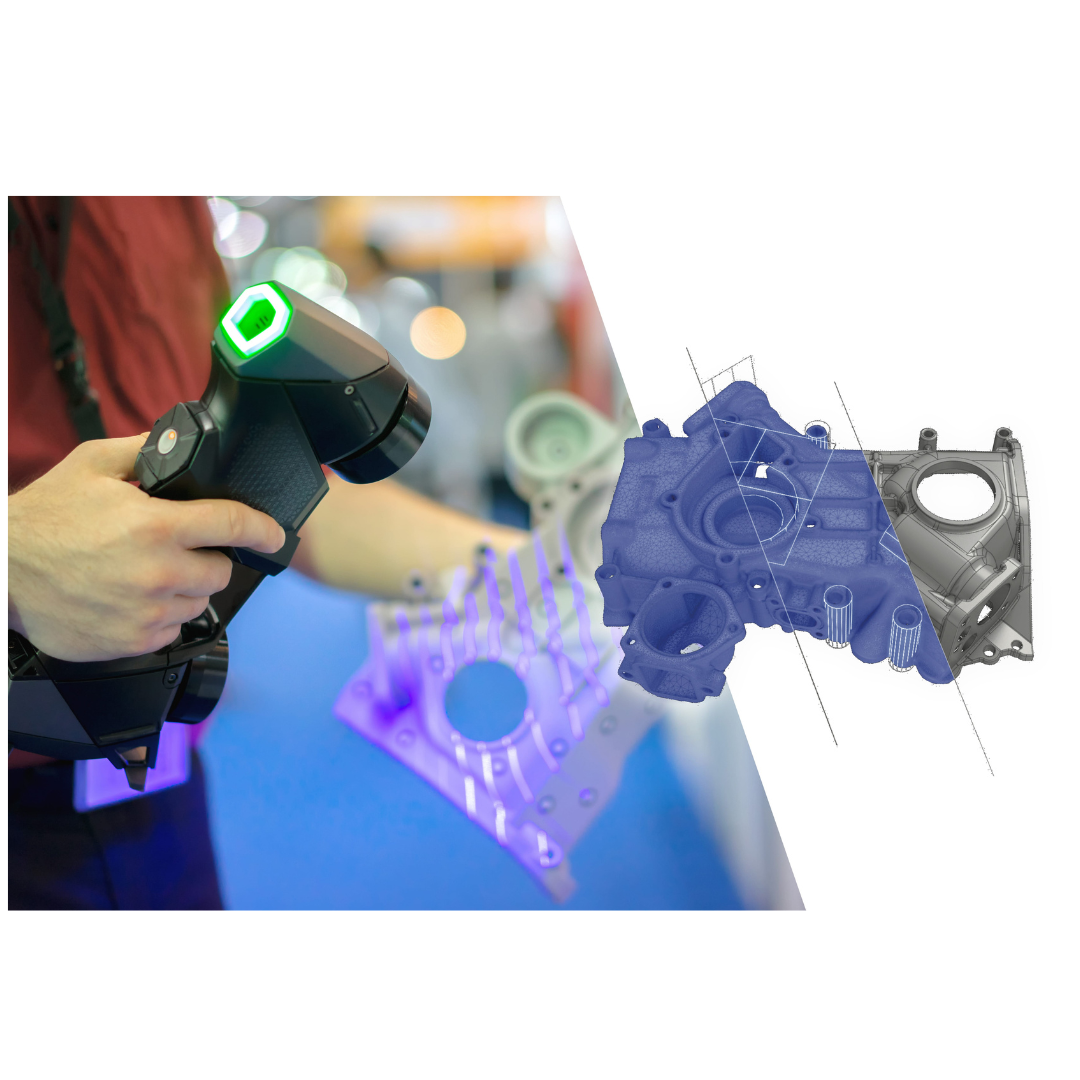
- Replace obsolete parts. We can 3D scan an existing part on site or at our facility, reverse-engineer it into a CAD model, and produce the replacement.
- Move fast. Polymer parts by FDM can be ready in as little as 1 day, and metal parts in as little as 7 days, depending on size, quantity and post-processing.
- Hold a digital inventory. Store part files securely and print only when you need them, instead of holding physical stock.
From broken part to replacement: the workflow
- Identify the part. Share the part, a drawing or a CAD file, and tell us where it works: temperature, pressure, loads and the fluids it touches.
- Capture the geometry. If there’s no CAD, we 3D scan and reverse engineer it — rebuilding worn or damaged areas to the intended shape.
- Choose the material. Match the material to the operating conditions using its technical and safety data sheets.
- Print, finish and inspect. The part is printed, post-processed and dimensionally and visually inspected.
- Store the file. Keep the validated file in your digital inventory, ready to reprint next time.
Materials for oil and gas parts
| Need | Materials | Process |
|---|---|---|
| Chemical resistance (fuels, oils, aggressive chemicals) | PVDF, PPS (including carbon-fibre PPS), PEEK, PEKK | FDM |
| Complex, support-free polymer parts | PEEK 5100 and nylon powders | SLS |
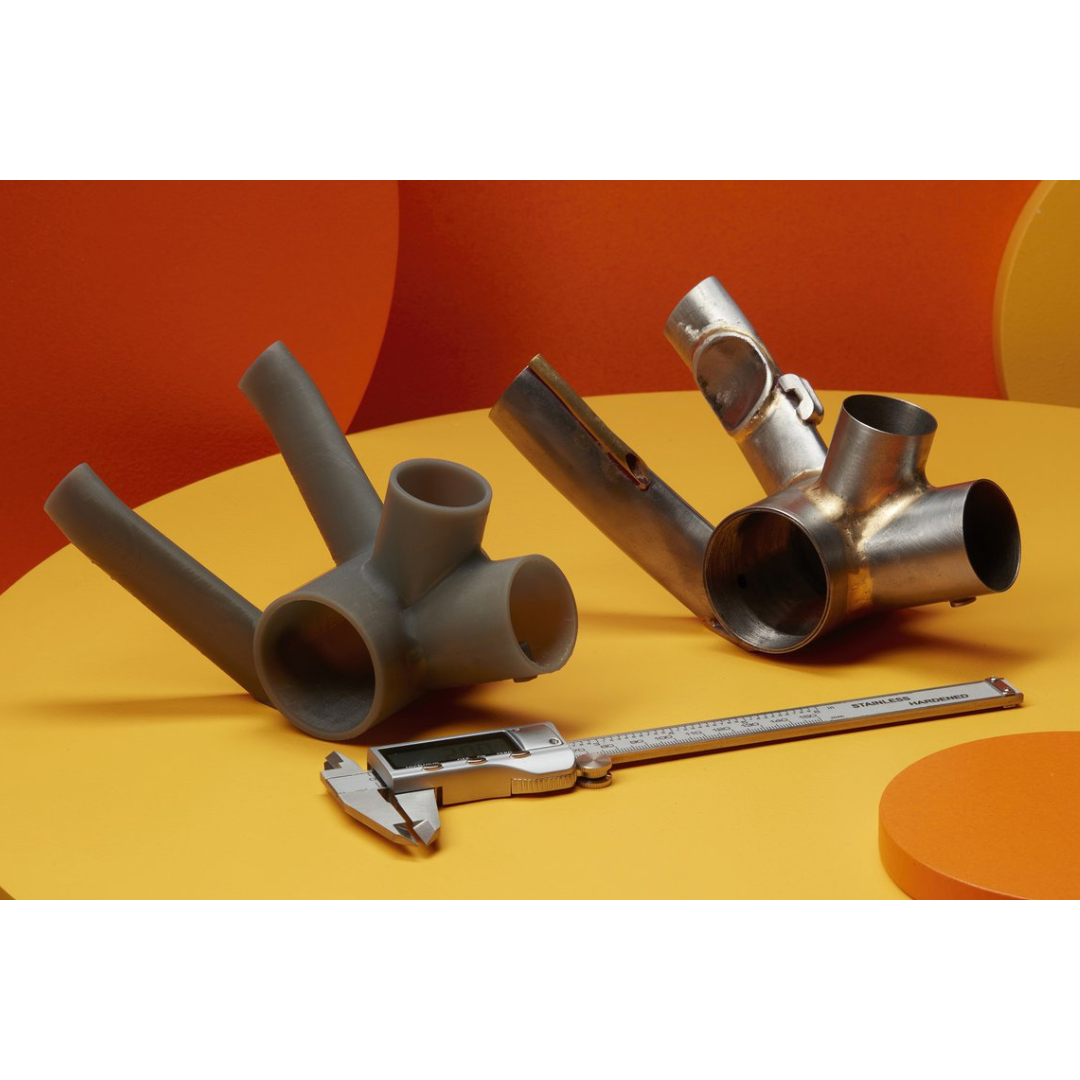
| High strength and corrosion resistance | Inconel 718 and 625, stainless steel 316L and 17-4 PH, titanium Ti64, cobalt chrome, maraging steel | Metal |
We provide technical and safety data sheets (TDS and SDS) so you can confirm compatibility with your specific media. For heat, see our guide to heat-resistant materials.
Where to start
The fastest wins usually come from parts that are hard to source but not safety-critical:
- Covers, guards, housings and brackets.
- Handles, knobs, clips and cable management.
- Tooling and maintenance aids — custom tools, fixtures and gauges for maintenance and assembly work.
- Prototypes and fit-check parts to validate a design before committing to machining.
Building a digital inventory
Instead of stocking shelves of rarely used spares, many teams keep a library of validated part files. Start with your most troublesome parts: those with the longest lead times, the highest downtime cost or no remaining supplier. Each part you digitise is one less emergency later.
How Quick 3D can help
Quick 3D produces functional, durable parts in highly chemically resistant materials, so energy engineers can solve field challenges faster. Every order is dimensionally and visually inspected, and we sign NDAs to protect your designs. Learn more about 3D printing for oil & gas.
Not in oil and gas? The same scan, reverse-engineer and print workflow works for any factory or plant. See on-demand spare parts & MRO.
Frequently asked questions
Can 3D printing replace obsolete oil and gas parts?
Yes. An existing part can be 3D scanned on site or at our facility, reverse-engineered into a CAD model, and produced by 3D printing in a suitable polymer or metal.
Which 3D printing materials resist chemicals?
Chemical-resistant options include PVDF, PPS, PEEK and PEKK for FDM, PEEK 5100 for SLS, and Inconel and stainless steel for metal printing. Technical and safety data sheets help confirm compatibility with your media.
What is a digital inventory?
A digital inventory stores validated part files instead of physical stock. When a part is needed, it is printed on demand, which reduces warehouse costs and the risk of parts becoming unavailable.
How fast can a replacement part be made?
Polymer parts by FDM can be ready in as little as 1 day, and metal parts in as little as 7 days, depending on size, quantity and post-processing.
Got a part you can’t source?
Share the CAD file, drawing or a sample part. Our engineers will recommend the right process, material and cost.
Get a QuoteWhatsApp Us