
3D printed moulds and patterns, for faster, cheaper tooling.
Combine 3D printing with traditional manufacturing processes to make tooling in days instead of weeks. Quick 3D prints master patterns, moulds and forming tools for casting, moulding and thermoforming — ideal for validating designs and producing limited runs of parts. Made in Shah Alam, Selangor.
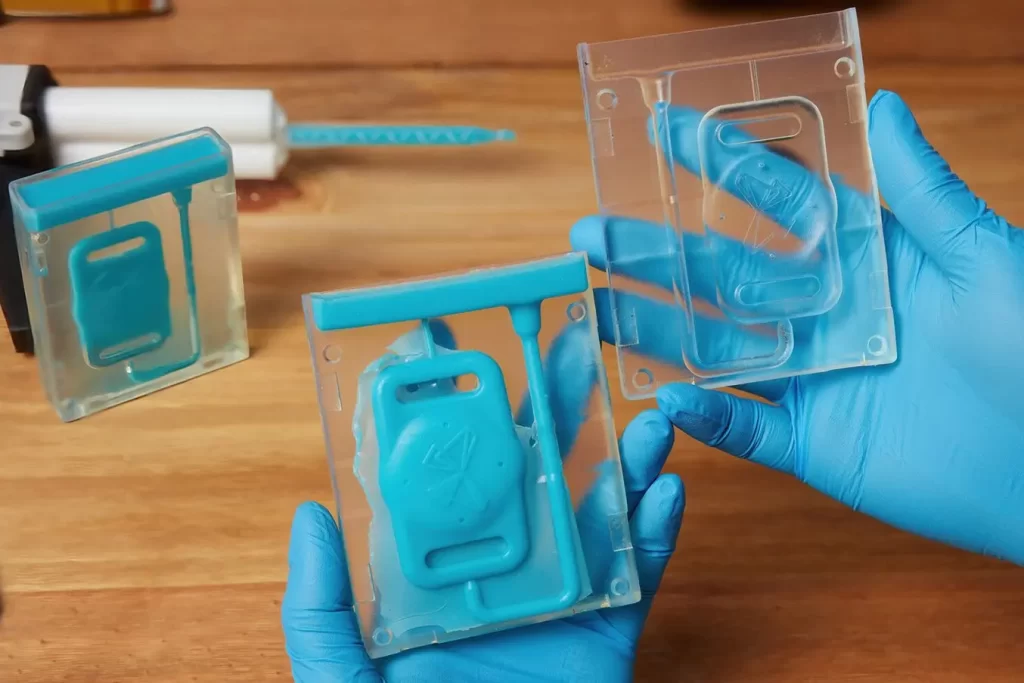
What rapid tooling can do
Master patterns for silicone moulds
Smooth, accurate 3D printed masters used to make silicone moulds for casting.
Urethane casting tooling
Silicone moulds from printed masters to cast production-like plastic and rubber parts.
Compression, overmoulding and insert moulding
3D printed moulds and patterns for limited runs of silicone and rubber parts.
Thermoforming moulds
Printed forming tools for vacuum-formed trays, covers, panels and packaging.
Investment casting patterns
Castable patterns for producing metal parts by investment casting.
Food-grade moulds
Moulds for chocolate and confectionery, made from 3D printed masters.
Tooling processes and services
Silicone Moulding
Tin- and platinum-cured silicone moulds in soft (15A) and firm (30A) grades.
Urethane Casting
Small batches of ABS-, PP-, PC- and rubber-like parts from silicone moulds.
SLA
Smooth, detailed master patterns, castable patterns and high-temperature resin tools.
Tooling Design
Design for additive manufacturing of moulds, fixtures and tooling.
Why choose 3D printed tooling
Days, not weeks
Printed patterns and moulds are ready far faster than machined tools, so you can test sooner.
Low cost to iterate
Change the design and print a new tool — no expensive re-machining.
Inspected and protected
Every order is dimensionally and visually inspected, and we sign NDAs to protect your designs.
Frequently asked questions
What is rapid tooling?
Rapid tooling means using 3D printing to make moulds, patterns and forming tools quickly, then using them with traditional processes such as casting, moulding or thermoforming.
When should I use rapid tooling instead of steel tooling?
Rapid tooling suits design validation, pilot runs and limited production, where the cost and lead time of a steel tool are not justified.
Which processes can use 3D printed tooling?
At Quick 3D, 3D printed moulds and patterns are used for silicone moulding, urethane casting, compression moulding, overmoulding and insert moulding, thermoforming and investment casting.
How many parts can a 3D printed tool make?
It depends on the process and material. Silicone moulds and printed tools are designed for limited runs; for higher volumes, see small-volume production or low-volume production.
Can you design the tooling for me?
Yes. Our design team creates moulds, patterns and tooling for additive manufacturing from your part CAD.
Start your tooling project
Share your part CAD and target quantity. We’ll recommend the right tooling route — casting, moulding or thermoforming — and the cost.