
Learn · Decision Guides
SLA vs PolyJet: Which Is Best for Your Prototype?
SLA and PolyJet both produce smooth, finely detailed resin parts, so they’re easy to confuse. The difference is what else they can do: PolyJet prints colour and multiple materials in one part, while SLA offers tougher, more functional resins.
How they work
- SLA (stereolithography) uses a laser to cure liquid resin layer by layer in a tank. Each part is printed in a single resin.
- PolyJet works like an inkjet printer: it jets micro-droplets of photopolymer and instantly cures them with UV light. Because it jets from several heads at once, it can combine multiple colours, transparencies and flexibilities in a single print.
Side-by-side comparison
| SLA | PolyJet | |
|---|---|---|
| Surface & detail | Smooth surfaces, crisp fine details and sharp edges | Exceptionally smooth surfaces and crisp text |
| Colour | One colour per part; painted or dyed afterwards if needed | Full colour and multiple colours in one print |
| Multi-material | One resin per part | Rigid, clear and rubber-like materials combined in one part — for example simulated overmoulding |
| Flexible / rubber-like | Flexible and elastic resins, such as Silicone 40A | Rubber-like materials with a range of Shore A hardness values |
| Clear parts | Clear resins, including for fluid-flow analysis | VeroClear and other clear materials, polished to optical clarity |
| Functional performance | Engineering resins: tough, rigid, high-temperature, flame-retardant and ESD-safe | Mainly for realistic visual and ergonomic models rather than demanding functional testing |
| Lead time | From 3 days | From 7 days |
Choose PolyJet when…
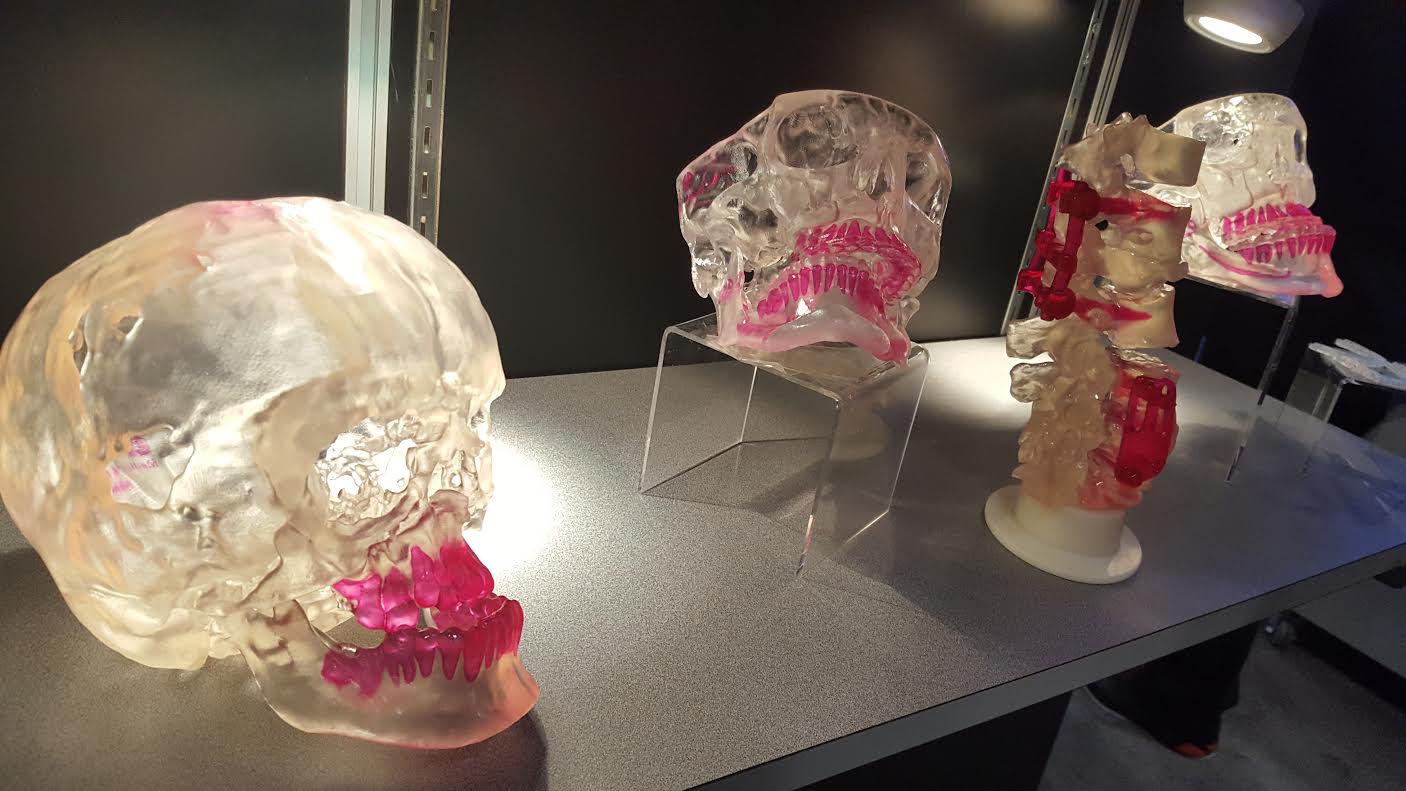
- You need a looks-like prototype with real colours, graphics or textures — for a pitch, a photo shoot or user testing.
- The design combines rigid and soft parts, such as a housing with a rubberised grip or a button with a soft seal.
- You want clear lenses, windows or light pipes printed together with opaque parts.
- You need anatomical or medical models with different tissues shown in different colours and hardnesses.
Choose SLA when…
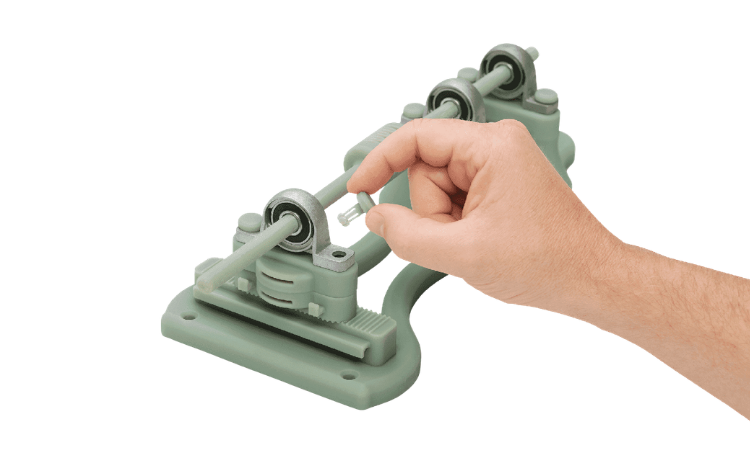
- The prototype must work as well as look good — snap-fits, assemblies and mechanical testing.
- You need engineering properties: toughness (Tough 1500, Durable), stiffness (Rigid 4000), heat resistance (High Temp), flame retardancy or ESD protection.
- You need tight-tolerance parts and complex assemblies with crisp details.
- You want a faster turnaround — SLA starts from 3 days.
- You plan to make masters for moulds — see silicone moulds from 3D printed masters.
Materials at Quick 3D
| SLA resins | PolyJet materials |
|---|---|
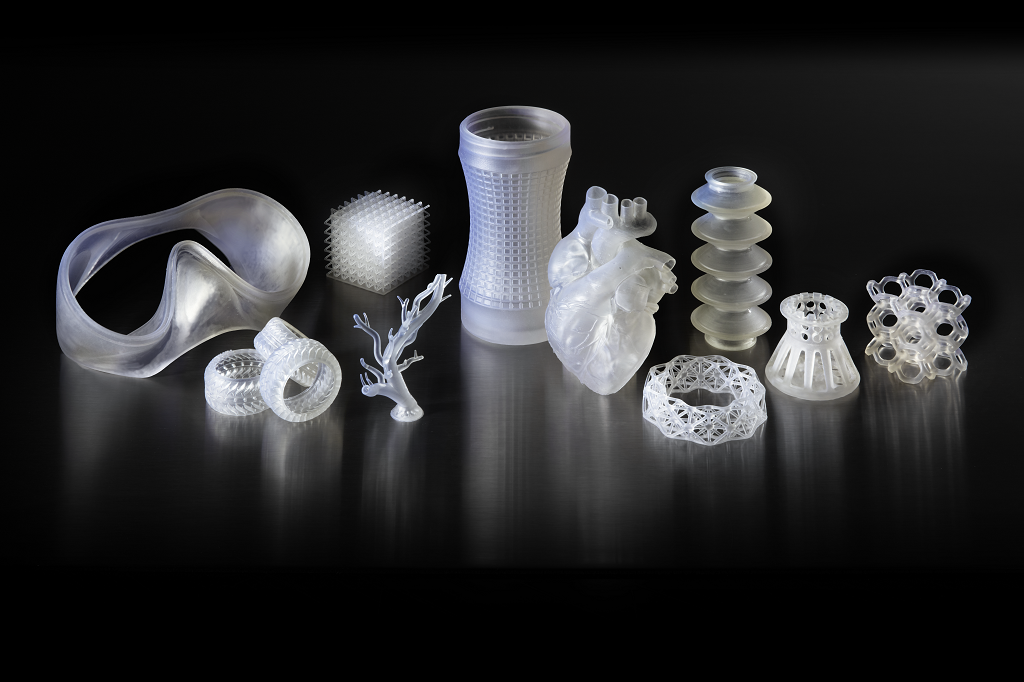
| Formlabs Tough 1500, Rigid 4000, Durable, High Temp, Flame Retardant, ESD, Silicone 40A and Castable Wax; Somos Taurus, WaterShed XC 11122, Imagine Black and LEDO; plus clear, ABS-like, PP-like and high-temperature resins | Stratasys VeroClear, Digital ABS Plus, Vero and Agilus full-colour, Agilus rubber-like, Rigur (PP-like) and MED610; plus 3D Systems VisiJet M3-X and M3 Crystal |
- Needs to look like the final product — colours, soft-touch, clear windows → PolyJet
- Needs to work like the final product — strength, heat, fit → SLA
- Needs to be strong and production-like in nylon → consider SLS or MJF
How Quick 3D can help
We offer both SLA and PolyJet, with finishing options from support removal to hand-polishing and clear-coating. Send us your file and tell us what the prototype is for — we’ll recommend the best process and material.
Frequently asked questions
What is the main difference between SLA and PolyJet?
SLA cures a single resin with a laser, offering tough, engineering-grade resins. PolyJet jets and UV-cures droplets from several heads, so it can combine colours, clear and rubber-like materials in one part.
Which is better for full-colour prototypes?
PolyJet. It prints full colour and multiple materials in one build. SLA parts are printed in one colour and can be painted afterwards.
Which is better for functional prototypes?
Usually SLA, because of its engineering resins — tough, rigid, high-temperature, flame-retardant and ESD-safe. PolyJet is mainly used for realistic visual and ergonomic models.
How fast are SLA and PolyJet?
At Quick 3D, SLA parts can be ready in as little as 3 days and PolyJet parts in as little as 7 days, depending on size, quantity and finishing.
Looks-like or works-like?
Tell us what your prototype needs to do. We’ll recommend SLA, PolyJet or another process — and the right material.
Get a QuoteWhatsApp Us