Additive manufacturing is transforming the aerospace industry, offering innovative solutions to long-standing challenges. As technology advances and regulatory frameworks evolve, its adoption is expected to grow, further enhancing efficiency and sustainability in aerospace manufacturing.
3D printing offers time and cost efficiencies over traditional manufacturing. It lets you validate ideas quickly and speed decision making. Versatile materials provide a more effective way to make tooling and the capability to make complex flight parts lighter, with fewer components.
Weight Reduction
Additive manufacturing allows for the creation of intricate geometries that can significantly reduce the weight of components, which is crucial for fuel efficiency in aircraft.
Rapid Prototyping
The ability to quickly produce prototypes accelerates the design process, allowing for faster iteration and testing of new ideas.
Customization and Flexibility
Parts can be tailored to specific requirements or customized for individual aircraft, allowing for rapid prototyping and faster iteration of designs.
Complex Geometries
The technology can produce intricate designs that would be difficult or impossible to achieve with traditional manufacturing methods, enabling more efficient and aerodynamic components.
Materials for Aerospace
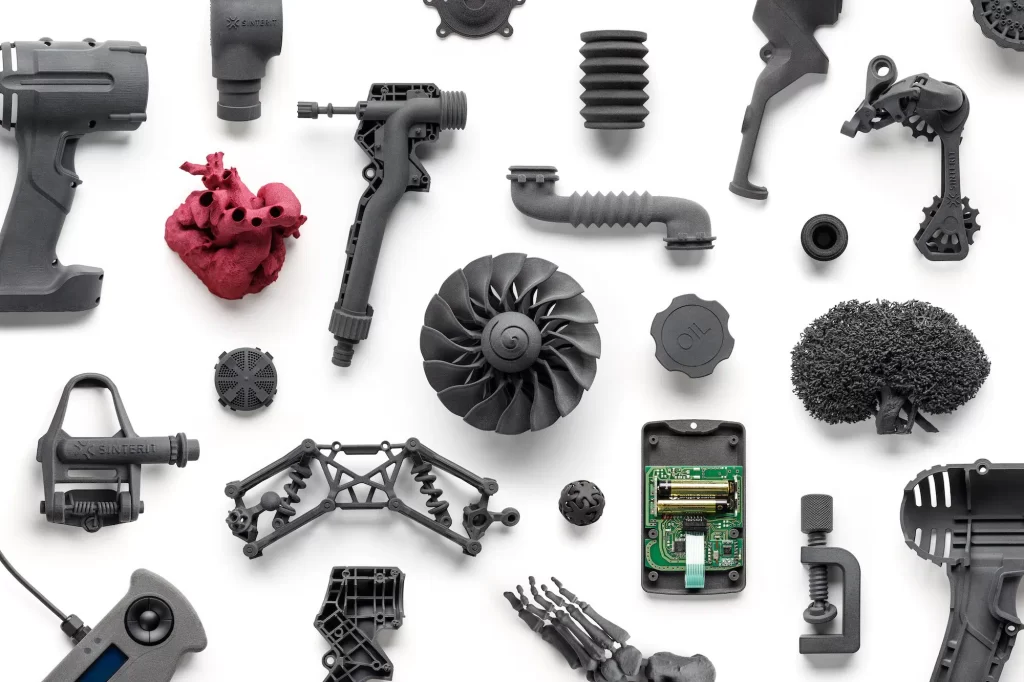
Quick3D offer a comprehensive material portfolio to address virtually any polymer additive manufacturing aerospace application. High-performance thermoplastics and photopolymers provide the right physical, mechanical, chemical and thermal properties needed for demanding applications in a regulated industry.
Engineering Materials for Prototyping and General Use
Solve design challenges before committing to expensive and time-consuming tooling and production.
Specialty Materials
When UAV components must meet more demanding criteria, specialty materials provide properties like elasticity, flame retardancy (FR), flame, smoke, and toxicity (FST) compliance, and electrostatic dissipation (ESD).
High-Performance Materials
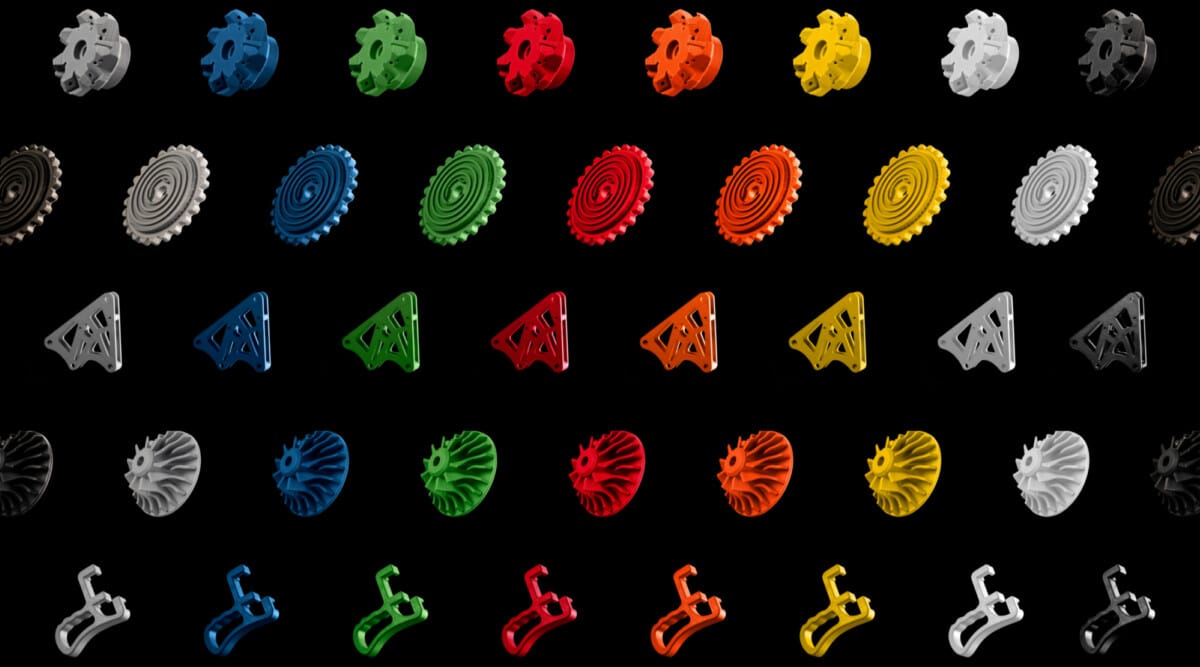
Create complex geometries not possible with other manufacturing methods to reduce weight and consolidate assemblies.
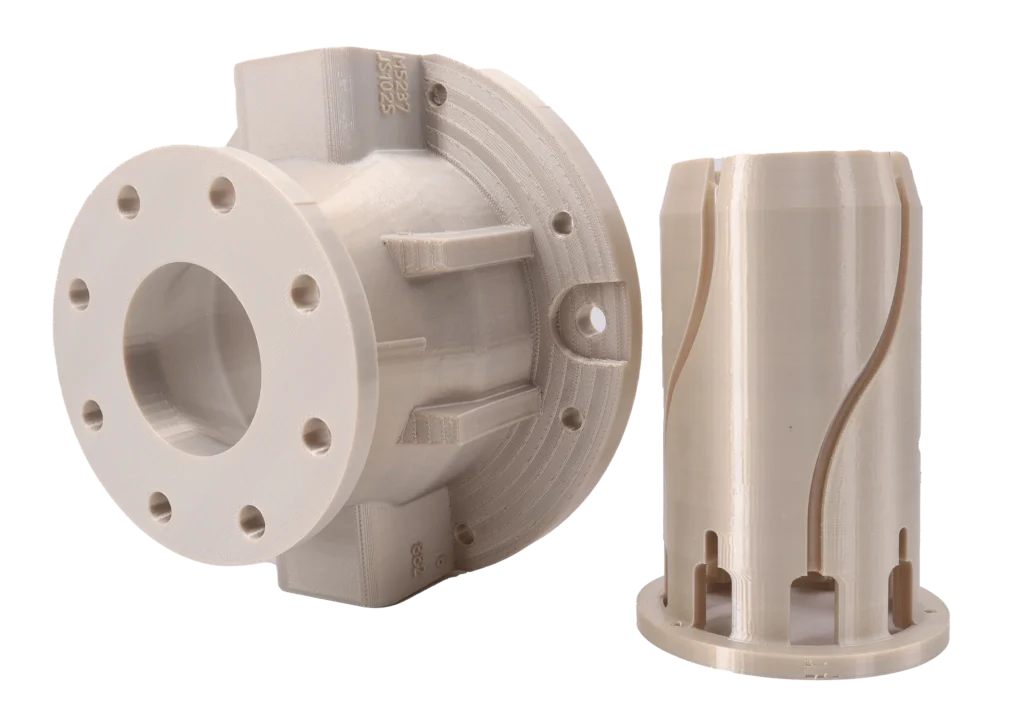
Ultem™ 9085
FAA-approved for FST applications (Flame/Smoke/Toxicity) and meets FAR 25.853 and OSU 65/65 standards. The addition of 15% high-modulus carbon fiber allows for superior strength and stiffness while maintaining excellent dimensional stability and printability.
Materials Hubs
Discover the materials designed to push the boundaries of aerospace innovation
*The ULTEM™ and 9085 trademarks are used under license from SABIC, its affiliates or subsidiaries.
UAV 3D Printing Applications
UAV additive manufacturing applications cover a wide range, enabling manufacturers to optimize weight, aerodynamics, durability, and functionality, whether for fixed-wing aircraft, multirotor drones, or VTOL (vertical takeoff and landing) hybrid platforms.
The following is a sampling of 3D printing applications and UAV 3D printed parts used by drone manufacturers. Their potential is limited only by the capabilities of available materials and the creativity of UAV designers.
Prototyping & Modeling
Solve design challenges before committing to expensive and time-consuming tooling and production.
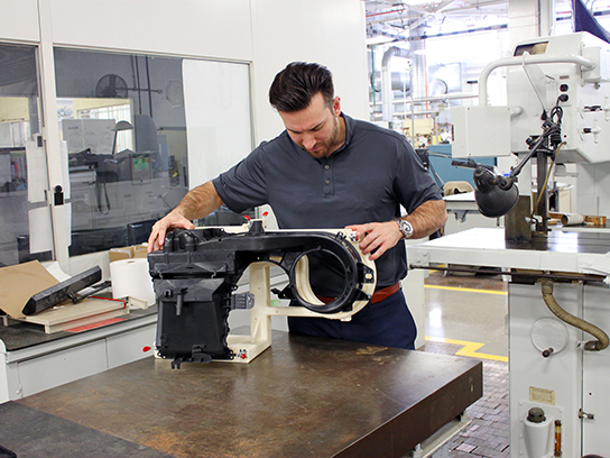
Jigs, Fixtures, and Tooling Filaments
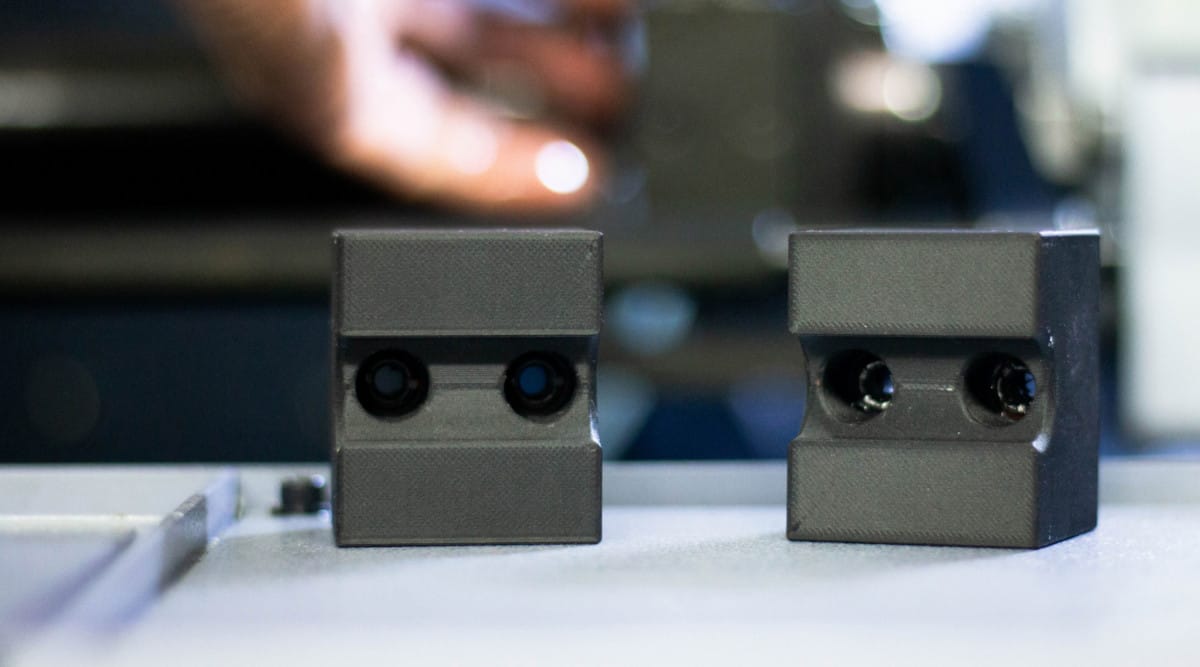
Avoid the high cost and long lead time of machined tools with 3D printed jigs, fixtures and custom manufacturing aids.
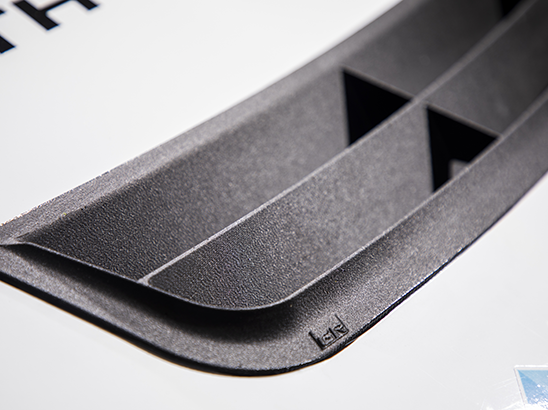
Flight Parts
Create complex geometries not possible with other manufacturing methods to reduce weight and consolidate assemblies.
Take the Next Step.
Share a few details about your project so our manufacturing experts can call you with the right material, cost, and production solution for your business.
 Additive Manufacturing Specialist now.